


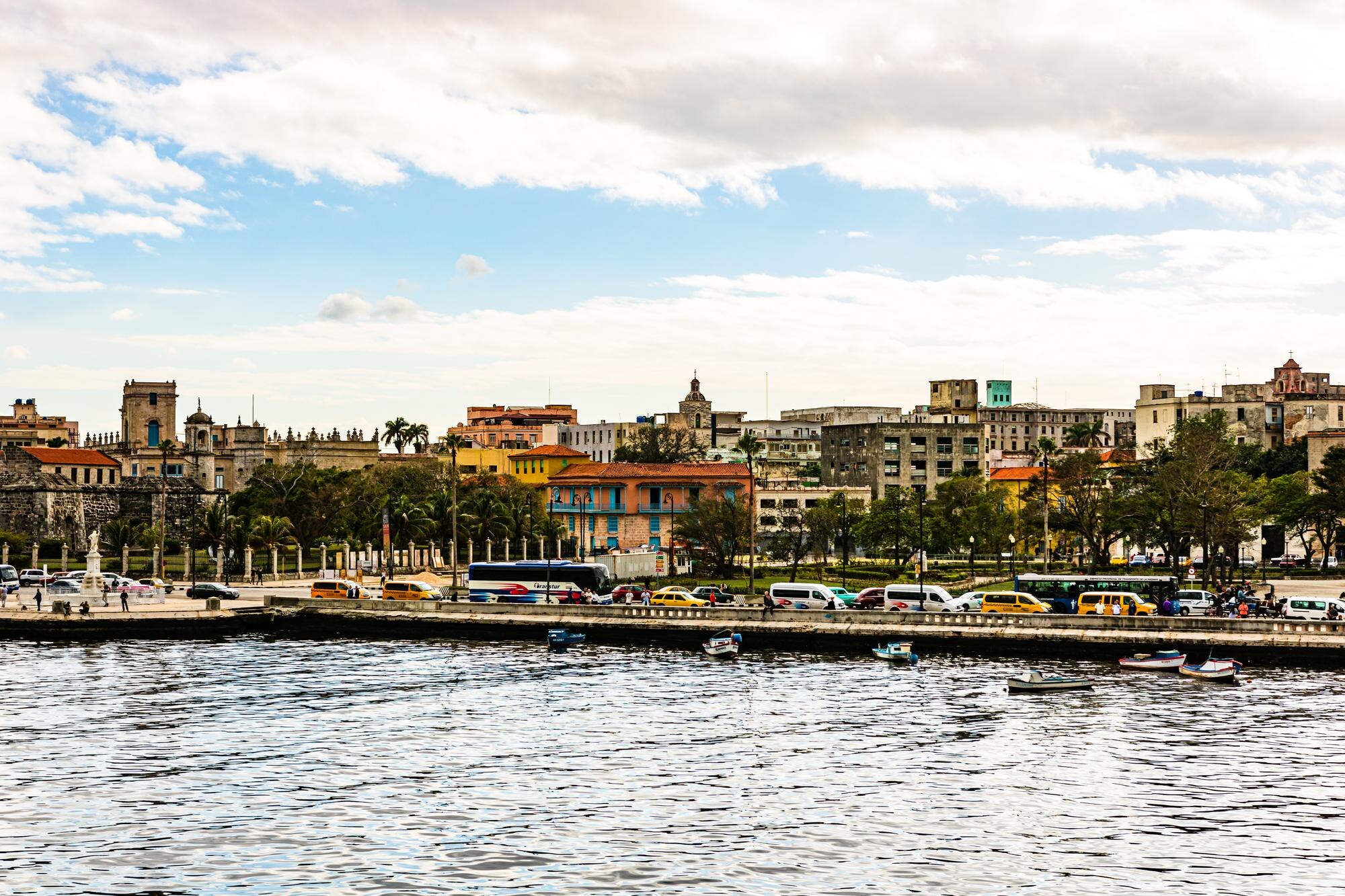
Havana ranks as the largest city in Cuba, ahead of Santiago de Cuba and Camagüey. Beyond the capital’s long waterfront and crowded neighborhoods, regional cities draw you in with more focused attractions. A church square, music tradition or tobacco workshop can shape your visit. The ten largest cities in Cuba appear below, ranked by population, with census years and reasons to stop. A province comparison and travel suggestions follow the list.
In This Article
- 1. Havana
- 2. Santiago de Cuba
- 3. Camagüey
- 4. Holguín
- 5. Guantánamo
- 6. Santa Clara
- 7. Las Tunas
- 8. Bayamo
- 9. Cienfuegos
- 10. Pinar del Río
- Key Takeaways
- Frequently Asked Questions
1. Havana
With 2,106,146 residents in 2012, Havana stood well ahead of every other city on this list. The capital, called La Habana in Spanish, forms a separate province bearing that same name. You can spend several days exploring its neighborhoods, with enough variety to make each day's walks feel different.
Begin those walks among Old Havana’s historic plazas and UNESCO-recognized fortifications before continuing into Centro Habana. From its narrow streets and weathered facades, step out onto the Malecón’s open waterfront. Part of the pleasure is that sudden shift from enclosed blocks to sea and sky. For a different perspective beyond the oldest streets, explore Vedado. Follow the waterfront between walks, but make time to head inland too. Havana rewards the journey between neighborhoods as much as a visit to any single landmark.
2. Santiago de Cuba
With 431,272 residents recorded in 2012, Santiago de Cuba anchors the southeast as Cuba’s former colonial capital. It also governs the province that shares its name. History surrounds you at Parque Céspedes. The city’s ties to Cuban son and Afro-Cuban traditions give you a different way to get to know it.
Away from the central square, the UNESCO-listed San Pedro de la Roca fortress guards the bay entrance. Its defensive setting contrasts with the square’s public life, so leave time for both when visiting Santiago. Back around Parque Céspedes, stop if you hear son. Listen to how the voices, strings and percussion work together rather than simply passing by.
3. Camagüey
Before you reach a monument, Camagüey’s maze of winding streets and large clay water jars, called tinajones, set it apart. Once used to store water, the jars now stand as symbols of the city. The streets break from the straight grids familiar in many colonial centers. Instead, their irregular paths lead into church squares and courtyards.
Walking those streets is the best reason to linger in this inland provincial capital, which had 300,958 residents in 2012. The historic center is UNESCO-listed, but its appeal unfolds with each turn. Your view shifts, and a small plaza breaks up the route you expected to follow. Choose Camagüey if you want the streets themselves to hold your attention.
4. Holguín
From Loma de la Cruz, you can see why Holguín is called the “city of parks.” Green spaces punctuate the blocks below, breaking up the streets that stretch across the city. Take in that wider view before heading back down to explore at street level.
Back in the center, pause at Parque Calixto García to watch daily life unfold around you. Holguín is the capital of its namesake province in eastern Cuba and had 287,881 residents in 2012. Moving between the hilltop view and the gathering places below is part of the pleasure. It suits visitors who value everyday city life as much as headline sights.
5. Guantánamo
Make time in Guantánamo to hear Changüí, and listen for how the instruments answer one another. The tres, a Cuban string instrument, plays against percussion and the marímbula’s low notes. Bongos and a scraped metal güiro keep the rhythm moving. The interplay matters as much as the tune or the beat.
With roots in eastern Cuba, that music gives you a cultural reason to stop in the city. Guantánamo is the capital of its namesake province and had 217,135 residents in 2012. If regional music shapes your journey, consider extending your eastern route here rather than visiting only the better-known historical monuments.
6. Santa Clara
Santa Clara’s Tren Blindado monument tells its story through railway carriages and the bulldozer associated with tearing up the track. These objects make the battle’s scale tangible, rather than leaving you with a revolutionary slogan. Che Guevara’s forces derailed and captured the armored train during the Battle of Santa Clara in December 1958.
The Ernesto Che Guevara memorial complex carries that revolutionary association into a different setting. Between historical stops, Parque Vidal returns you to the everyday activity of the center. Santa Clara’s 2012 population was 211,925; its central location makes it a useful overland stop when that history is part of your route.
7. Las Tunas
Rita Longa’s Fuente de las Antillas shows why public sculpture is the strongest reason to stop in Las Tunas. Figures rise from the fountain, inviting you to pause and study them rather than simply pass through the space. The work makes the city’s reputation as Cuba’s capital of sculpture feel well earned.
Las Tunas, an inland provincial capital in eastern Cuba, had 162,957 residents in 2012. If public art interests you, consider a stop here, particularly when your route already crosses this part of the country. Take time to look closely at the outdoor works: they are the reason to visit, not a diversion between bigger attractions.
8. Bayamo
In January 1869, Bayamo’s residents burned their own city rather than surrender it to Spanish forces during the struggle for independence. Knowing that choice casts the town’s founding in 1513 in a different light. Its past asks you to consider what people willingly sacrificed, not just what remains today.
That independence history also has a personal connection: Carlos Manuel de Céspedes was born here. He is associated with the start of the Ten Years’ War in 1868. Bayamo also has ties to Cuba’s national anthem, “La Bayamesa.” The capital of Granma province recorded 157,027 residents in 2012, but those historical connections, rather than its size, make it worth a stop.
9. Cienfuegos
The neoclassical facades surrounding Parque José Martí set Cienfuegos apart from the twisting streets of Camagüey. Pause in the square to take in the columns and balanced fronts. The UNESCO-listed historic center reflects the city's beginnings in 1819, when settlers of French origin founded it.
Beyond the planned center, the bay gives you another reason to explore Cienfuegos, a provincial capital on Cuba’s south coast. It had 150,404 residents in 2012. Walk along the waterfront toward Punta Gorda for wider views and distinctive buildings. Among them are wooden houses whose shaded verandas face the water.
10. Pinar del Río
Inside Pinar del Río’s cigar-making workshops, workers hand-roll the region’s tobacco crop into a finished product. Here, the province’s best-known industry comes into focus at a table, through a pair of hands. Tobacco’s story belongs to the city as much as to the countryside.
With 145,193 residents recorded in 2012, Pinar del Río is the capital of its namesake province in western Cuba. Stop here to see that connection to tobacco production firsthand. Then continue into the countryside as part of your wider western itinerary.
Each city appears alongside its province in the table below. All population entries come from the same 2012 urban-settlement census, so they are historical counts rather than current estimates.
| City | Province | Population, 2012 |
|---|---|---|
| Havana | La Habana | 2,106,146 |
| Santiago de Cuba | Santiago de Cuba | 431,272 |
| Camagüey | Camagüey | 300,958 |
| Holguín | Holguín | 287,881 |
| Guantánamo | Guantánamo | 217,135 |
| Santa Clara | Villa Clara | 211,925 |
| Las Tunas | Las Tunas | 162,957 |
| Bayamo | Granma | 157,027 |
| Cienfuegos | Cienfuegos | 150,404 |
| Pinar del Río | Pinar del Río | 145,193 |
For a first shortlist of cities to visit in Cuba, give Havana the most time. Add Camagüey or Cienfuegos for architecture, or make Santiago the anchor of an eastern journey. Santa Clara and Bayamo suit a historical focus; the remaining stops work best when their particular interests match yours.
Key Takeaways
- Treat the ranking as a comparison of city sizes, not a guide to how long you should stay.
- Give your chosen cities time: a neighborhood walk or a musical performance may reward you more than squeezing in another destination.
- Let a few clear interests shape your route, with room for less familiar stops that fit those interests.
Frequently Asked Questions
Are Havana and La Habana the same city?
The same city is called Havana in English and La Habana in Spanish. La Habana is also the capital’s province name, so you may see it in information about either the city or the province.
Is Guantánamo city the same place as the Guantánamo Bay naval base?
Guantánamo city and the U.S. naval base at Guantánamo Bay are two separate places. A visit to the civilian provincial capital gives you no tourist access to the base. Instead, make the city’s culture the focus of your stop.
Which province contains Bayamo?
Granma province has its capital in Bayamo. Note both names in your itinerary to distinguish references to the wider province from stops in the city itself.
Which province contains Santa Clara?
Villa Clara province has Santa Clara as its capital. The name Villa Clara refers to the wider region rather than the city, so these labels identify different areas.
Do the listed cities always share their province’s name?
No, the provinces containing Bayamo and Santa Clara do not share those cities’ names. For Havana, the mismatch is only linguistic: the table gives the province’s name in Spanish. Knowing the difference helps you make sense of place names along your route.
How can readers find the original population source behind a ranking?
Check the source note at the end for the census authority, year and geographical unit used in this ranking. A municipality may cover a different area from its urban settlement, so that distinction matters when comparing populations. Keep municipal totals separate from city figures rather than treating them as interchangeable.
Population source note: Every figure comes from the Oficina Nacional de Estadística e Información (ONE), Cuba’s 2012 census reporting on urban settlements. This single dataset underpins the ranking; municipal totals and later estimates are not mixed into it.