


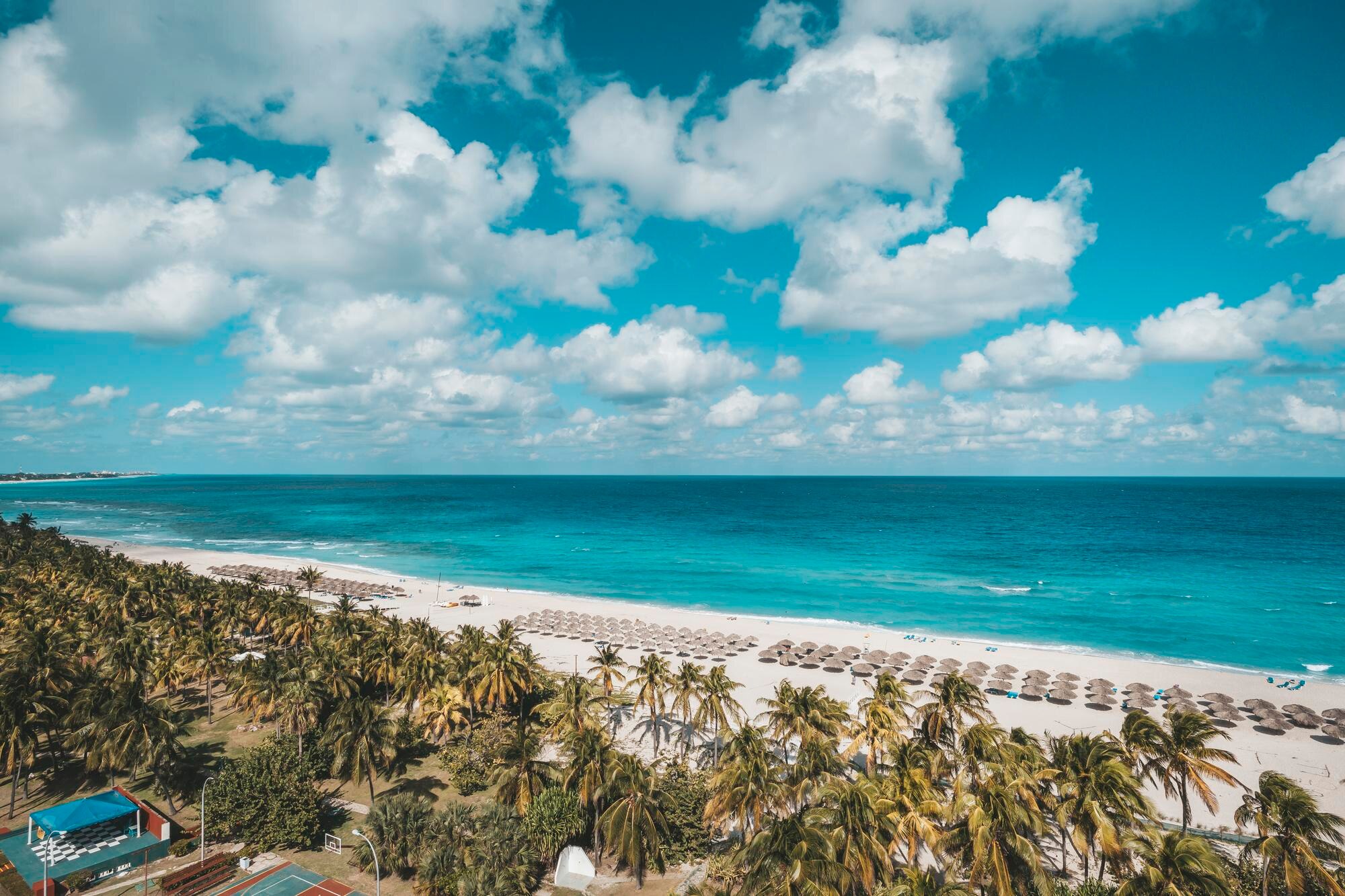
Varadero stretches along a peninsula, with miles of sand to explore. On cays such as Cayo Coco and Cayo Largo, the water becomes the focus of your trip. Cuba beaches span long mainland shores beside towns where people live and pale offshore sands with sea views in almost every direction. Choosing among the best beaches in Cuba means deciding how you want to spend your time. You might combine city and coast, settle into a resort beach, or linger on an island shore.
These twelve destinations cover those choices, with a sense of each beach and the journey needed to reach it. Each entry gives its location, an approximate distance from a named city or airport, and what makes the shore worth visiting. Distances are in miles; road journeys and boat crossings are identified separately. Transport schedules and services can change, especially for offshore islands.
In This Article
- 1. Varadero
- 2. Cayo Coco
- 3. Cayo Guillermo
- 4. Cayo Santa María
- 5. Cayo Largo
- 6. Guardalavaca
- 7. Playa Ancón
- 8. Cayo Levisa
- 9. Playa Pilar
- 10. Playas del Este
- 11. Cayo Jutías
- 12. Playa Girón
- Key Takeaways
- Frequently Asked Questions
- Choose Your Coast and Confirm Access
1. Varadero
About 90 miles east of Havana, Varadero runs along the Hicacos Peninsula on Cuba’s northern coast. The drive takes about two hours, making a day trip possible. Stay overnight if you want more time on the sand after the journey. Juan Gualberto Gómez Airport is roughly 15–20 miles from the western resort area. Transfers take longer if your hotel is farther along the peninsula.
Once you arrive, about 13 miles of beach give you plenty of shore to explore. With pale sand and blue water stretching beyond your hotel, there’s little reason to stay on the patch outside it. Hotels line much of the strip, yet where you stay shapes the holiday. Near the town center, you can mix beach time with walks through the streets and meals out. Toward the tip, your resort becomes the base for your stay. The sand stays the same; the rhythm changes.
2. Cayo Coco
Off the northern coast of Ciego de Ávila province, Cayo Coco belongs to the Jardines del Rey archipelago. The island’s Jardines del Rey Airport lies roughly 7–15 miles from many northern beach areas. Your chosen beach entrance or hotel determines the distance.
For a mainland arrival, you can take the 17-mile causeway instead. Along the northern shores, white sand meets bands of turquoise water that look shallow. Beaches such as Playa Flamenco and Playa Las Coloradas give you different stretches of shore to explore during one island stay.
Cayo Coco’s appeal lies in that balance: you stay offshore but can arrive by road or through its own airport. Long views across the sea come without the need for a boat crossing.
3. Cayo Guillermo
Cayo Guillermo lies west of Cayo Coco in the same island chain, with another stretch of northern shore to explore. From Jardines del Rey Airport, its main hotels and beach areas are about 25–30 miles away by road. You drive across Cayo Coco and onward to the island without needing a ferry.
Along the approach, low scrub and mangroves give way to broad views over shallow water. With stretches of coast framing the route, the drive feels quite different from a typical journey along a mainland road.
The northern shore is where much of Cayo Guillermo’s accommodation faces the beach. Several miles from the main hotel area, Playa Pilar lies toward the western end and is covered separately below. Stay on this cay if you want a beach-facing base with that distinctive shore within reach.
4. Cayo Santa María
Off Villa Clara province’s northern coast, Cayo Santa María is reached through Caibarién via a roughly 30-mile causeway. The usual mainland gateway is Abel Santamaría Airport near Santa Clara, about 70 miles by road from the main hotel areas. From there, plan on around two hours of driving, depending on where you stay.
The causeway makes the arrival part of the attraction. Sea spreads out beside the road, and the long crossing gradually separates the island stay from the mainland behind you. It also reaches neighboring Cayo Las Brujas and Cayo Ensenachos, each a distinct cay.
On Cayo Santa María, the beaches run along the Atlantic-facing northern shore. The reward for the substantial transfer is a broad beach setting where the sea, rather than a nearby city, determines the shape of your day.
5. Cayo Largo
Off Cuba’s southern coast, Cayo Largo del Sur lies within the Canarreos archipelago. The island’s Vilo Acuña Airport is generally a few miles from the main places to stay and beach areas. From there, Playa Paraíso is roughly 4–6 miles away, depending on which access point you use.
With no road connecting the island to the mainland, you normally arrive by air and take a local transfer. The flight becomes part of your Cuba beach stay. Your travel arrangements may use a charter or another available service.
At the shore, open sand replaces the bustle of a small-airport arrival. Playa Paraíso and nearby Playa Sirena are distinct beaches, each known for pale sand and clear water. After the effort of getting here, Sirena’s wide shore makes a pleasant contrast. Your next journey can be nothing more than a walk beside the water.
6. Guardalavaca
On Cuba’s northeastern coast, Guardalavaca lies in Holguín province, about 35 miles from Holguín city. Frank País Airport is 45–50 miles away by road. Transfers from the airport usually take about an hour, though the route and your accommodation determine the journey time.
A curved sandy bay meets a settled stretch of coast, with accommodation and services close to the shore. Unlike an offshore cay, the beach feels part of a place where people live and spend time. That curve also shapes the view: the sand traces the water’s edge rather than stretching away along an endless straight coast.
This close pairing of bay and settlement gives Guardalavaca its particular appeal. Nearby Playa Esmeralda and Playa Pesquero belong to the wider Holguín resort region, but each is a separate destination.
7. Playa Ancón
About 8 miles south of Trinidad, Playa Ancón sits on the Ancón Peninsula along Cuba’s southern coast. Driving directly takes about 10 minutes, while shared transfers and trips with stops take longer.
With such a short trip, you can easily pair this Cuban beach with a stay in the city. Spend the morning among Trinidad’s colonial streets and cobblestones, then enjoy a long afternoon beside the Caribbean. The open shore has hotels along parts of the peninsula.
A base in Trinidad puts city life first, while a stay on the peninsula centers your trip on the beach. Either way, you can enjoy both. Nearby La Boca rounds out this small coastal area with a fishing settlement and a waterfront of its own.
8. Cayo Levisa
Reaching Cayo Levisa, off the northern coast of Pinar del Río province, takes both a drive and a boat ride. From Viñales, travel about 35 miles by road to the mainland departure point at Palma Rubia. The boat crossing then takes about 30 minutes.
With no road causeway, the boat is your only way across to the island. You land on its sheltered southern side, then cross to the sandy northern shore facing the Gulf of Mexico. The open beach comes into view after that passage across the island, making the arrival feel especially rewarding.
On a western Cuba trip, a visit here makes the crossing part of your beach day rather than just a transfer. Plan around the boat departure and leave enough time for the drive. That way, you can enjoy the shore without rushing back to the dock.
9. Playa Pilar
At Cayo Guillermo’s western end, Playa Pilar lies roughly 35–40 miles by road from Jardines del Rey Airport on Cayo Coco. Staying in the main Cayo Guillermo hotel area puts you several miles from the beach. The local route follows island roads to the beach approach.
Behind the sand, high dunes make a striking backdrop compared with a flat hotel frontage. Look across the water to Cayo Media Luna, a small offshore island. It gives you a point to focus on beyond the blue.
The name Pilar recalls Ernest Hemingway’s boat, Pilar, adding a story to the setting. Yet the dunes and offshore views earn this shore its place among memorable Cuban beaches. Visit for the beach itself. Give yourself time to appreciate the sand behind you as well as the water ahead.
10. Playas del Este
East of Havana, Playas del Este brings several beaches within reach of the city. The closest stretches lie less than 15 miles from central Havana. Santa María del Mar, a popular choice, is about 15–20 miles away by road. Travel time varies with your starting neighborhood and the beach you choose.
Bacuranao, Tarará, Santa María del Mar, Boca Ciega, and Guanabo make up the group. The wide sandy shore takes center stage at Santa María del Mar, where the setting leans toward resorts. In Guanabo, the beach sits closer to town life, with streets and everyday services becoming part of your visit.
Your choice shapes the feel of a Havana-based beach day. Head to Santa María del Mar to spend your time focused on the sand. Pick Guanabo if you prefer moving between the shore and the surrounding town.
11. Cayo Jutías
Around 40 miles by road from Viñales, Cayo Jutías lies off the northwestern coast of Pinar del Río province. Allow roughly 90 minutes to two hours for the drive. You can reach the main beach without a boat, thanks to a causeway linking the cay to the mainland.
Potholes slow the drive along rough stretches of the approach, while mangroves line parts of the road. Give yourself time for this slower stretch rather than counting on a quick trip to the coast.
Beyond the mangroves, the view opens up. The main beach stretches along the cay’s northern side, past the island’s mangrove-fringed areas. Here, you leave a vehicle rather than arrive by boat as you would at Cayo Levisa. White sand awaits.
12. Playa Girón
About 60 miles by road from Cienfuegos, Playa Girón names both the beach and the village around it. They sit on the eastern side of the Bay of Pigs. This is Cuba’s southern coast, in Matanzas province.
At the local Museo Girón, you can learn about the 1961 Bay of Pigs invasion. That history adds weight to time on the beach. The shoreline forms part of the setting for an event remembered well beyond Cuba.
Beyond its history, this coast has rocky stretches and nearby snorkeling and diving sites, unlike the long northern resort beaches. You can spend time at the museum and explore the water without one experience overshadowing the other. At the head of the bay lies Playa Larga, a separate beach destination.
Key Takeaways
- Weigh the journey alongside the beach itself: getting there shapes your day as much as the shore does.
- For a stay that keeps town life within reach of the sand, choose a mainland beach.
- Allow enough time on an offshore trip to enjoy the crossing or flight rather than rush through it.
- Name the specific beach you want to visit when an island or beach group has several options.
Frequently Asked Questions
Is Playa Pilar a separate island or a beach on Cayo Guillermo?
At the western end of Cayo Guillermo, Playa Pilar is a beach, not a separate island. The island you see offshore is Cayo Media Luna; the dunes are part of Pilar’s beach setting.
Does reaching Cayo Levisa require a boat crossing?
Yes, reaching Cayo Levisa requires a boat from Palma Rubia. The landing is on the sheltered southern side, while the sandy beach lies across the island on its northern shore.
Are Cayo Coco and Cayo Guillermo connected by road?
Yes, you can travel by road between Cayo Coco and Cayo Guillermo. Both islands use Jardines del Rey Airport, which is on Cayo Coco, as their airport gateway.
Does Playas del Este name one beach or several?
Rather than a single beach, Playas del Este refers to several shores east of Havana. Within the group, Santa María del Mar has a beach-resort feel, while Guanabo is more closely connected to its town.
Which airport serves Cayo Santa María, and how much onward travel remains?
The usual mainland gateway is Abel Santamaría Airport near Santa Clara. From there, you still have the roughly two-hour road transfer described above. The route takes you through Caibarién and across the long sea causeway.
What should visitors confirm about transport before booking Cayo Largo?
Before booking, check that your arrangements specify the flight to Vilo Acuña Airport and the island transfer to your accommodation. Cayo Largo requires an air arrival, unlike the northern road-linked cays. Both transport arrangements should be included in the booking itself.
Choose Your Coast and Confirm Access
When choosing among the best Cuban beaches, leave time for the shore rather than just the journey. The best beach in Cuba is one you can enjoy without rushing.