


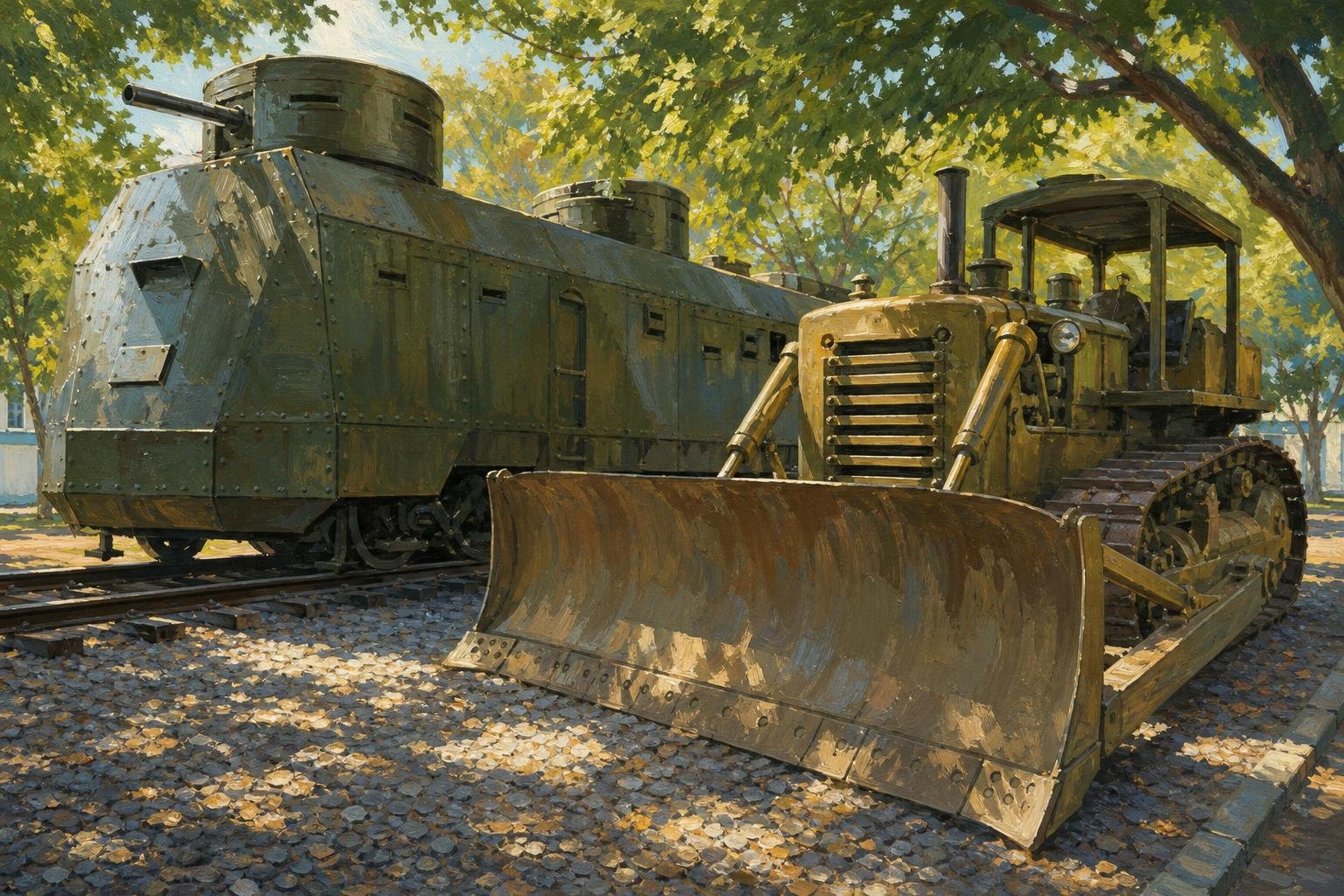
A bulldozer helped change the revolution’s course in Santa Clara, Cuba, a city in central Cuba. Build your visit around three essential sights: the Che Guevara memorial, the armored-train monument and El Mejunje cultural center. At the memorial, a commander’s remains are laid to rest. The train monument preserves the machinery used in a battle. For a different side of the city, the cultural center brings people together for performances in an open courtyard.
In This Article
- Visit the Che Guevara Memorial
- Understand the Battle at Tren Blindado
- Make Time for El Mejunje
- Where to Stay
- Get There and Organize Your Stay
- Decide Whether a Private Tour Fits
- Key Takeaways
- Frequently Asked Questions
- Plan Your Santa Clara Stops
Visit the Che Guevara Memorial
At the Che Guevara Memorial, a bronze commander towers over a monumental plaza, while the museum reveals a more personal side. Photographs, letters and uniforms shift your attention from the public figure to the man. Take time with these smaller objects. They give the vast complex a human scale.
Inside the mausoleum, the mood shifts from display to remembrance. Che’s remains rest here with those of fellow fighters from his campaign in Bolivia. Fidel Castro lit the eternal flame that makes remembrance a lasting presence. This is a burial place, rather than another exhibition room.
In 1997, three decades after his death, Che’s remains were brought to Cuba. Their return gave Santa Clara a connection more intimate than a statue. The city associated with his revolutionary victory was now also the place of his return.
Understand the Battle at Tren Blindado
Start with the bulldozer at Tren Blindado to understand how the battle unfolded. In the Battle of Santa Clara in December 1958, Che’s rebel forces used it to rip up railway tracks. That derailed an armored train carrying government troops. Armor could shield the occupants from gunfire, but it could do nothing to move the carriages over broken rails.
With the train stranded, the rebels attacked with weapons including Molotov cocktails, until the occupants surrendered. Capturing the train weakened government resistance as Fulgencio Batista’s rule entered its final days.
The monument still holds railway cars and the bulldozer associated with the operation. Compare the machine’s size with the carriages beside it. Construction equipment became the decisive tool here, doing a job far removed from its usual purpose.
Make Time for El Mejunje
Founded by Ramón Silverio in 1984, El Mejunje is known for its performances and its welcome to Cuba’s LGBTQ+ community. This cultural center brings a different side of Santa Clara’s history into view, rather than leaving the past behind. The people gathering here continue to shape that history.
Inside the walls, a tree rises through an open courtyard with no roof, giving the venue its distinctive shape. The program includes drag performances alongside other local cultural events. These details give you a clearer sense of the place than a general promise of entertainment for the evening.
Even if revolutionary history drew you here, make room for El Mejunje on Calle Marta Abreu, close to the center. Pick a performance that catches your interest and stay for it. Let the event be your reason to spend the evening, rather than treating the venue as another monument to check off.
Where to Stay
The streets around Parque Leoncio Vidal make a useful starting point when choosing accommodation for a short stay. For proximity to El Mejunje, consider Calle Marta Abreu; Calle Luis Estévez is another option near the central square. Staying in these central stretches keeps restaurants and everyday services close by.
For a room with access to a local host, consider a smaller casa particular, Cuba’s privately operated guesthouse accommodation. That contact can be useful if you need help planning onward travel. It gives you someone to ask about arranging the next leg of your journey.
Whatever lodging you choose, give its location more weight than its type. East of the square, Tren Blindado fits into a downtown walk; the Che memorial is southwest of the center. Staying on the southwest side puts the memorial within easier reach, but makes an evening downtown less convenient. Choose an outlying hotel if your stay revolves around arranged transport or hotel facilities. For walking, favor a central base.
Get There and Organize Your Stay
From Havana, the drive east to Santa Clara follows the Autopista Nacional into central Cuba. The capital of Villa Clara province is about 172 miles away. Allow for a substantial journey rather than a quick excursion. You won’t have the whole day free for sightseeing.
Choose a private transfer if you want control over departure time and stops along the way. With an intercity bus, your arrival depends on the service’s timetable. Either way, build in a buffer so a delay doesn’t mean missing the place you most wanted to see.
Staying overnight gives you more room to plan your visit. Set aside time for the Che Guevara memorial, group downtown sights such as the armored-train monument together, and save the evening for El Mejunje. Santa Clara can then fit into a longer route through Cienfuegos or Trinidad. There’s no need to return to Havana between destinations. Bear in mind that transport schedules and venue hours can change.
Decide Whether a Private Tour Fits
At the train monument, a good guide can use the equipment before you to explain how the battle unfolded. Ask them to trace the damaged track, derailment and surrender. Then, at the memorial, turn to the museum’s account of Che’s life. Ask how it relates to the Bolivia campaign commemorated in the mausoleum.
Making those connections is the best reason to hire a local guide. Booking a tour from Havana is more about transport: you get there and back, but spend substantial time on the road. Check whether the itinerary matches your priorities. El Mejunje may be missing from a revolution-focused excursion. For an evening performance, an overnight arrangement or independent stay is a more natural fit.
Key Takeaways
- Take time at the Che Guevara memorial to study personal objects and visit the burial space.
- At the armored-train monument, trace the bulldozer’s part in the battle to understand what happened.
- Make space for a performance at El Mejunje cultural center alongside historical sightseeing.
- Stay centrally if you plan to walk and spend evenings out.
- Match your needs to a guide’s interpretation or a tour’s transport.
Frequently Asked Questions
Is Santa Clara in Cuba or South America?
You’ll find Santa Clara in Cuba, not South America. Plan your visit as a city stop rather than a beach stay, since it’s inland.
How do the Che Guevara memorial and Tren Blindado differ?
The memorial concerns Che’s life and burial, while Tren Blindado explains a particular military action. Give the former a slower visit; at the latter, follow the physical sequence of the operation.
What does El Mejunje add to a history-focused visit?
Live performance and community life at El Mejunje bring a different perspective to a trip focused on remembrance. Here, you share the experience with an audience rather than encounter it through a museum display.
Which accommodation areas suit the sights you want to visit?
Stay in the center for downtown sightseeing, or choose the southwest if the memorial is your main stop. For an evening performance, pick accommodation that keeps the trip back to your room easy.
Can Santa Clara fit into a broader central-Cuba itinerary?
Yes, you can work an overnight stay in Santa Clara into a longer central-Cuba route. Stay the night to make it more than a daytime pause between transfers.
What should travelers check before booking a private Santa Clara tour?
Before you book, confirm how long you’ll spend at each stop and which costs the price covers. Check whether pickup, return transport, guide service, entrance charges and any accommodation are included so you can compare the full cost.
Plan Your Santa Clara Stops
Keep your evening plans loose rather than filling every hour of the visit. After reading displays and tracing the course of a battle, turn your attention to a performance. El Mejunje’s courtyard has open sky overhead instead of a ceiling. Give yourself time to watch what unfolds there.