


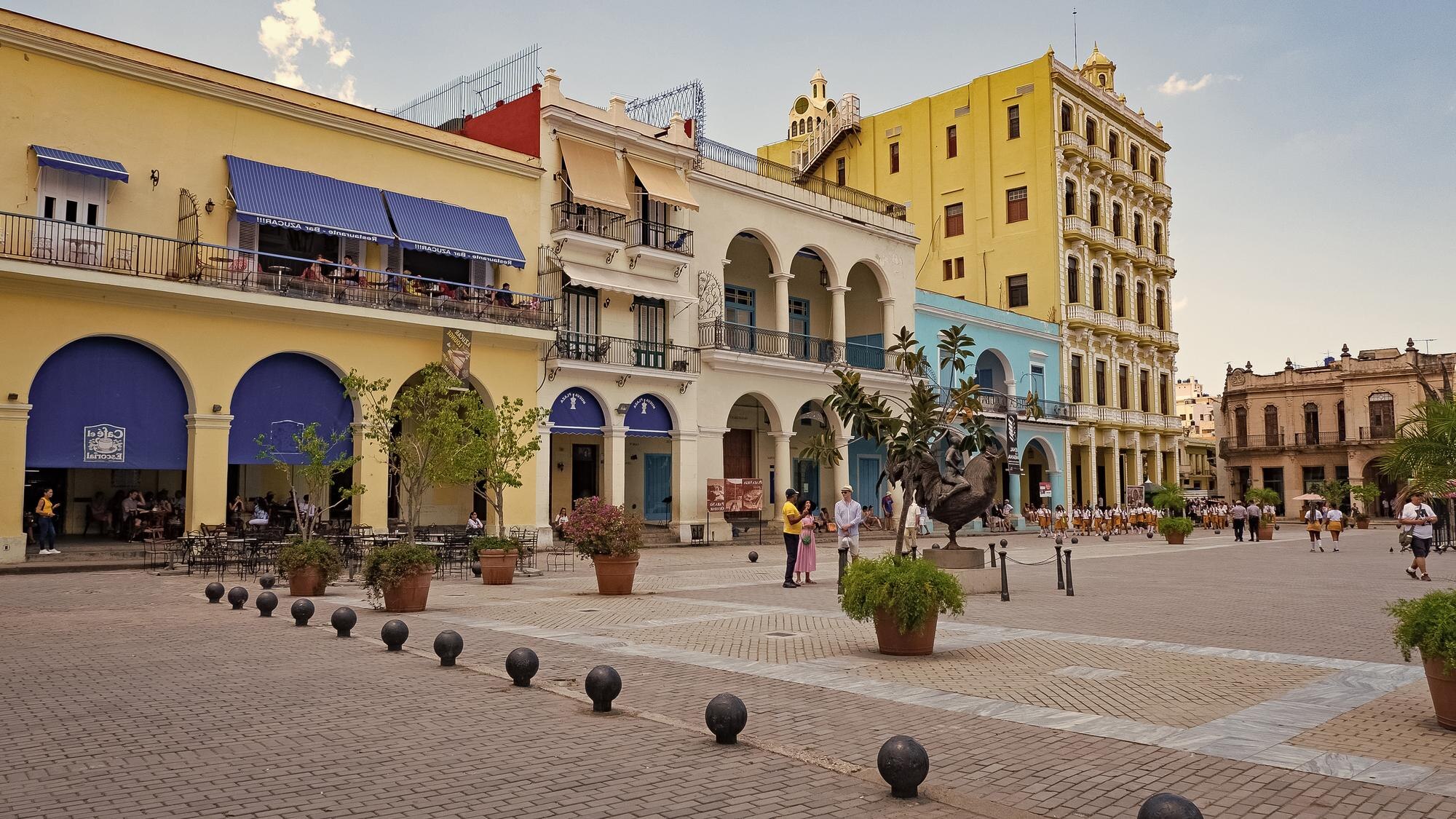
Some of the most rewarding things to do in Cuba take you through Old Havana’s squares, to live music in Trinidad, and into Viñales Valley. Mix in Varadero’s beaches or a mountain waterfall for a trip that reaches both coast and countryside. The 13 experiences below range from cultural stops to swimming spots and walks beyond the cities. For more time by the sea, consider a beach stop at Villa Tarará, east of Havana.
The road between Havana and Trinidad brings its own rewards as city streets give way to farmland. Through your window, the view opens onto countryside. Make these two cities your cultural bases, then pick the places to visit in Cuba that suit the route or merit a separate stay. For each stop below, you’ll find a reason to visit and ideas for spending your time, rather than another box to tick.
In This Article
- 1. Walk Through Old Havana
- 2. Spend an Evening on the Malecón
- 3. Eat at a Paladar
- 4. Hear Live Music and Take a Dance Class in Trinidad
- 5. Explore Viñales Valley
- 6. Have a Beach Day in Varadero
- 7. Visit the Caves Near Varadero
- 8. Discover Matanzas
- 9. Visit Manaca Iznaga in the Valley of the Sugar Mills
- 10. Explore Revolutionary History in Santa Clara
- 11. Walk Through Cienfuegos
- 12. Snorkel at Bahía de Cochinos
- 13. Hike to Waterfalls in Guanayara
- Key Takeaways
- Frequently Asked Questions
- Build Your Cuba Trip Around Variety
1. Walk Through Old Havana
Begin your walk at Plaza de Armas, then head toward Plaza Vieja through the historic center. Include stops at Plaza de la Catedral and Plaza de San Francisco de Asís along the way. Cathedral frontage, arcades and residential buildings give each square a character of its own. Take your time between them: the walk is as rewarding as the squares themselves.
Between the squares, you hear footsteps on the paving and find relief from the sun in narrow strips of shade. Restored facades stand alongside active businesses and buildings still waiting for repairs. To see more than the monuments in this UNESCO-listed district, linger in a square and watch everyday life unfold. A guided walk puts these streets in the context of colonial trade. It also explains why restoration has changed some blocks more than others.
2. Spend an Evening on the Malecón
Pick a spot along the Malecón’s waterfront promenade and stay as the daylight fades. Few things to do in Havana call for less planning than an evening here. People fish from the seawall while friends talk over one another nearby. Traffic noise mingles with the sound of water breaking against the stones.
Those conversations are as much a draw as the waterfront itself. Keep walking, settle down for a while or head back when the sea turns dark. There’s no endpoint you need to reach. Across the harbor, La Cabaña’s cannon ceremony at 9 p.m. gives the evening a more formal spectacle. Here along the seawall, everyone enjoys the evening on their own terms. Move inland if waves start washing over the wall.
3. Eat at a Paladar
Sometimes set in a home dining room, a paladar is a privately run restaurant with a feel distinct from hotel dining. On the menu, look for ropa vieja, shredded beef in a tomato-based sauce. Another dish to try is moros y cristianos, rice cooked with black beans. Even before the food arrives, cooking onions and garlic can smell just as inviting.
Let the day’s dishes guide your order, since the menu depends on what the kitchen has available. Rather than squeeze another landmark into the afternoon, take your time over the meal.
You can also experience everyday hospitality at a casa particular, a privately operated guesthouse. Sharing breakfast with your host sets a different morning pace than heading straight from a hotel to a tour. Time at the table becomes part of your trip.
4. Hear Live Music and Take a Dance Class in Trinidad
Take a seat on the broad stone staircase near Plaza Mayor at Trinidad’s Casa de la Música. Percussion carries across the steps, with bright brass phrases rising above the beat and conversation when the band includes those instruments. Some people get up to dance; others watch from their seats. Either way, you’re part of the evening.
To get a feel for moving to that music, try a class. Cuban salsa, often called casino, builds on partner patterns that are easier to follow with guidance on footwork and rhythm. Begin with the basic step, repeating it until it feels familiar. There’s no need to bring a partner.
Return to the staircase later, and you may hear the beat differently. What you listened to earlier may now feel like a rhythm you can follow.
5. Explore Viñales Valley
Above the farmland rise Viñales Valley’s mogotes, steep-sided limestone hills whose pale rock and green slopes contrast with red earth. Those contrasts give the valley its unmistakable shape. Follow the rural paths on foot or horseback to look up at these towers and appreciate the scale a roadside photograph misses.
Among the tobacco fields, thatch-roofed curing barns draw your attention to the valley’s farming life. Visiting a farm takes you beyond the view and into the work. You can learn how leaves are grown, dried and prepared before becoming cigars. A guide can explain how that process relates to the surrounding crops and geology.
For time to pause along the paths, go on foot; horseback outings give you another way to explore the valley. Either way, allow time for the countryside rather than treating it as a quick photo stop.
6. Have a Beach Day in Varadero
A long sandy shoreline and resort infrastructure put Varadero among the famous places in Cuba. Beyond the hotel frontage, you have pale sand beneath your feet, turquoise shallows and a wide horizon. Follow the firmer sand at the water’s edge, then settle into a spot where you can spend the afternoon without rushing.
Staying at a resort gives you access to beach facilities, though you need few plans for the day. Swim when conditions allow, and make time to do nothing.
For a day afloat instead, take a catamaran excursion along a scheduled route. These trips often include snorkeling or an island stop. Go for the boat journey and its stops, rather than feeling you need to improve on a quiet day on the sand.
7. Visit the Caves Near Varadero
The cool freshwater at Cueva de Saturno is a sharp contrast to the heat outside. Descend into the limestone cavern to reach clear water pooled beneath the rock. Compared with the open sea at Varadero, swimming here feels sheltered and still. Wear secure footwear for the steps and uneven surfaces.
For a walk rather than a swim, visit Cueva de Bellamar, near Matanzas, to see its underground formations. Follow the guided route past stalactites overhead. Take your time to notice shapes along the cave walls.
Your choice comes down to swimming at Saturno or taking a closer look at the rock at Bellamar. Neither outing makes a sensible replacement for a beach day during heavy rain.
8. Discover Matanzas
Bridges and a bay give Matanzas a distinctive shape, making the city worth visiting in its own right. Start at Teatro Sauto, the performing-arts landmark that dates to 1863. The building’s architecture introduces you to a city where performance has long been part of local life.
Beyond the theaters, Matanzas has close ties to Afro-Cuban rumba, including guaguancó, which brings together percussion, song and dance. With a local guide on a cultural visit, you can hear how each part responds to the others. Listen to that exchange rather than letting the music fade into the background.
Allow more than a brief detour from nearby Varadero to explore the city. Make time to hear Matanzas’s drums.
9. Visit Manaca Iznaga in the Valley of the Sugar Mills
At Manaca Iznaga, a tower rises about 144 feet above the grounds of the former estate. Near Trinidad, Valle de los Ingenios, or the Valley of the Sugar Mills, still holds traces of the region’s sugar economy. Climb to take in the broad view, but give the buildings below just as much attention.
Those estates owed their wealth to enslaved labor, a history that should shape how you understand the site. The tower and surviving buildings were part of a system of production and power, not just a picturesque rural property. A knowledgeable guide can place the estate within the wider valley and explain how sugar production shaped work. Visiting after Trinidad’s town center reveals the source of much of the wealth behind its historic buildings.
10. Explore Revolutionary History in Santa Clara
Two sites in Santa Clara tell the Cuban Revolution’s history from different perspectives. A towering bronze figure dominates the monumental setting of the Che Guevara memorial complex. Inside the complex, you can visit a museum and a mausoleum. Keep your visit to the mausoleum quiet and respectful: this is a place of commemoration.
At the Tren Blindado monument, railway carriages bring the story down to ground level. The derailed cars make the attack on an armored train during the fighting in 1958 easier to picture than a date on a wall would. Walk around them before moving through the displays.
Together, the sites show the difference between remembering an individual and interpreting a military event. The scale shifts from a figure on a pedestal to the physical remains of a train.
11. Walk Through Cienfuegos
Around Parque José Martí, broad streets, pastel facades and civic buildings make the historic center of Cienfuegos feel open and orderly. Founded in 1819, the city took shape around a planned layout, with French influence marking its early history. Its architecture has a different rhythm from that of Havana or Trinidad.
From the center, follow the waterfront toward Punta Gorda as the bay takes over the view. Make Palacio de Valle your destination along the walk. Its ornate exterior is a striking contrast to the center’s neoclassical architecture.
For an architecture-focused visit, Cienfuegos stands out among the places in Cuba best explored on foot. Walking lets you appreciate the shift from the central streets’ geometry to the open views across the bay.
12. Snorkel at Bahía de Cochinos
Around Playa Larga and Playa Girón, you can swim and snorkel in Bahía de Cochinos, also known as the Bay of Pigs. Coastal limestone marks the boundary between land and water at sites where you enter from shore. Underwater, reef fish swim above coral. At the reef drop-offs, the water shifts from pale shallows to deeper blue.
With underwater sights so close to shore, you need not devote a whole day to a boat trip. Still, enter carefully and seek local guidance on rocky shores, even in calm-looking water.
Beyond the water, Playa Girón’s museum explores the 1961 invasion, giving you another reason to visit. Make time for the exhibits if that history interests you. Along this shore, a marine outing sits alongside a chapter of Cuba’s modern history.
13. Hike to Waterfalls in Guanayara
In Guanayara, within the Topes de Collantes area of the Escambray Mountains, forest replaces the island’s open coast and city streets. The trails take you to El Rocío waterfall and the pool called Poza del Venado. The walk between them is as much the point as either stop, with water growing louder as you draw near.
An organized excursion may include transport into the area, but you’ll need shoes with good grip for the walk. Expect uneven ground along the trail and slippery stretches after rain.
A mountain swim may be part of your idea of the best places to visit in Cuba. Leave time for the pool rather than heading straight back from the waterfall. The cold water at Poza del Venado will make you catch your breath.
Key Takeaways
- Base yourself in cities for nearby outings, allowing enough time to enjoy each place beyond the trip there.
- Hear Cuban music at a live performance, then learn through a lesson; each gives you a different way to connect.
- Shape your mix of architecture, revolutionary history and rural life around what interests you most.
- Keep a beach afternoon or a meal leisurely, rather than squeezing another stop into every spare moment.
Frequently Asked Questions
A little planning can stop an unexpected setback from costing you an entire day. These questions address the practical arrangements most likely to shape your outings.
Is It Risky to Travel to Cuba Right Now?
In Cuba, theft, power outages, fuel shortages and limited access to medicines can pose risks or disrupt your trip. Pack essential medication and a charged power bank, and carry enough cash for everyday expenses if electronic payment is unavailable. Leave a spare day before your flight rather than counting on a tight road connection. U.S. regulations prohibit ordinary tourist travel for U.S. travelers. Your visit must qualify under an authorized travel category.
Is Cuba a Good Place for Tourists?
If you enjoy history, music and meeting people, Cuba can be rewarding, provided you can handle disruptions to your plans. Travelers who depend on reliable transport, connectivity and supplies may find it less suitable. Plan your route and choose accommodations where you would be comfortable staying longer if arrangements change.
What Can I Do in Cuba If Rain Interrupts an Outdoor Day?
When rain changes your plans, head to a museum, take a dance lesson or linger over a meal at a paladar. For an indoor art visit, try Havana’s Museo Nacional de Bellas Artes, where you can see Cuban art. Keep caves and waterfalls for days with suitable conditions; neither is a place to shelter from heavy rain.
Do Catamaran Excursions Include Transfers and Snorkeling Equipment?
Hotel transfers and snorkeling equipment come with some catamaran packages, but you cannot count on either being included. Meals, drinks and island access vary by package too, and what is included can change. Check the written description and choose a package that covers the services you need for the day.
Can Beginners Join a Cuban Dance Class?
Yes, beginners can learn basic timing and steps with many instructors. You'll have time to practise each movement before trying partner patterns, with adjustments for mobility limitations. After the lesson, you can choose whether to join the social dancing.
Build Your Cuba Trip Around Variety
Give a stop a second morning before you add another destination to your trip. You might revisit a square you rushed through in Havana, or keep an evening free for music in Trinidad. Leave time to enjoy a favorite place again rather than always moving on.