


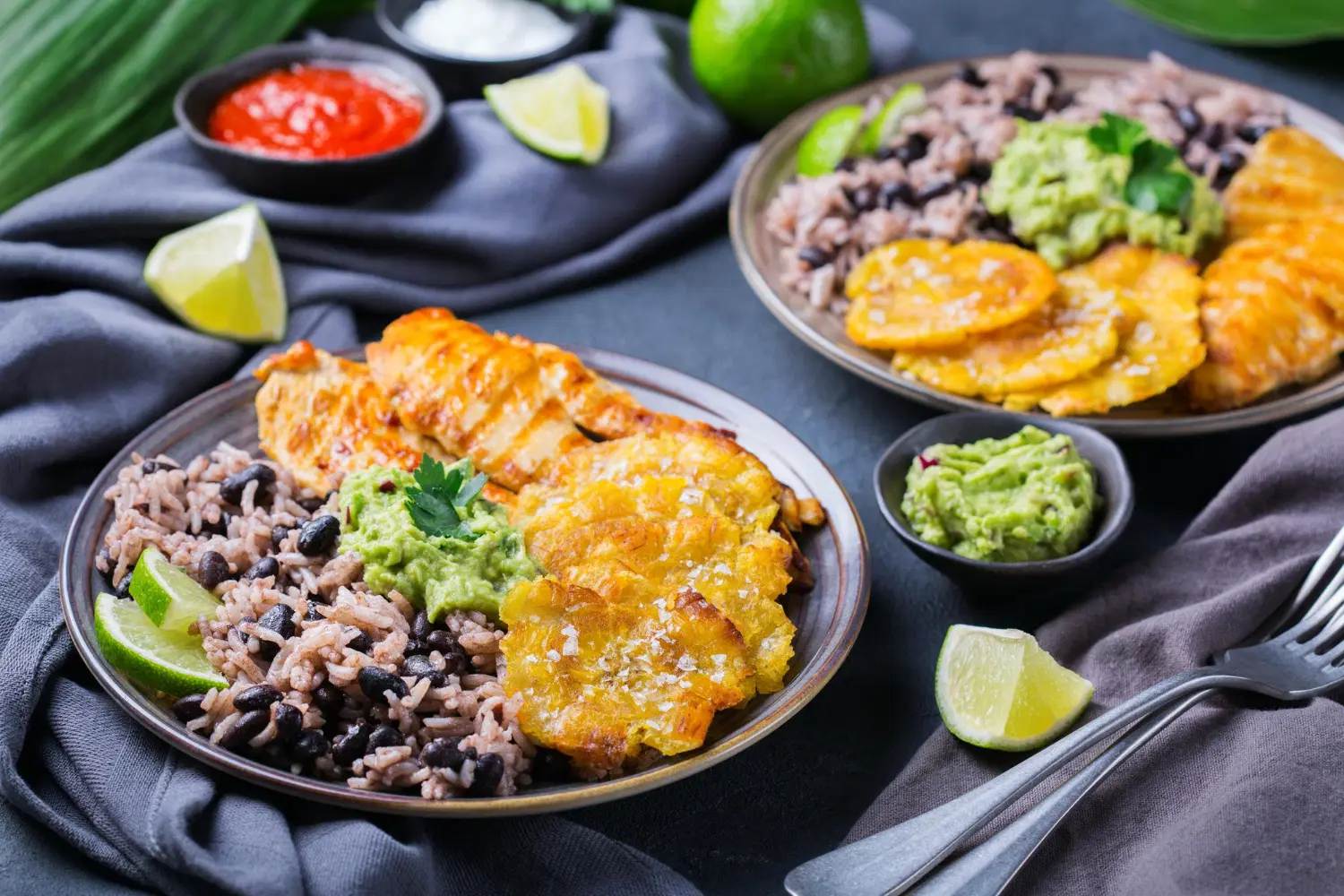
If your menu has rice and beans with two different names, shredded beef, and plantains that are both sweet and savory, then knowing the names of some local foods allows you to order with confidence. Knowing a few cuban foods will help you make your decision. If you looked up “what is cuban food,” you’ll find that it’s not quite as straightforward. Cuban food is full of variety, and there is no one signature dish. Instead, focus on the foods that serve as cornerstones of daily life. This list of eight popular foods gives you an introduction to traditional Cuban food by examining their main components and where they fit in a meal. For each entry, you’ll learn what to expect and how you’ll encounter the dish during your travels.
In This Article
- 1. Congrí And Moros Y Cristianos: Rice And Beans
- 2. Seafood To Look For On Cuban Menus
- 3. Cuban Snacks Between Meals
- 4. Tostones: Twice-Fried Green Plantains
- 5. Ropa Vieja: Shredded Beef To Know
- 6. Lechón Asado: Cuban Roast Pork
- 7. Hearty Cuban Breakfasts
- 8. Rum Cocktails Alongside The Food
- Build Your Traditional Cuban Food Order
- Key Takeaways
- Frequently Asked Questions
- Build Your Traditional Cuban Food Order
1. Congrí And Moros Y Cristianos: Rice And Beans
Rice and beans are at the base of most meals in Cuba. Congrí typically refers to rice with red beans and moros y cristianos to rice with black beans, though these terms can vary by region or household. Congri refers to rice mixed with red beans, while moros y cristianos refers to rice mixed with black beans. But even here, there’s no strict definition, and you might find that a given kitchen uses either term to refer to any sort of bean dish. Ask about the type of beans, not the dish.
The cooking process infuses the rice with the color and taste of the beans. This is another filling side that goes well with roast pork or shredded beef. Note if the entrée comes with a side of beans, you might want to skip this on its own.
A traditional Cuban dish made of rice and red beans, Congrí is typically eaten with lechón asado (roast pig) or some other kind of meat. The name Congrí comes from the African word ngali, which refers to black-eyed peas.
2. Seafood To Look For On Cuban Menus
It’s a wide range of foods, not a specific dish. If you order fish, it could be grilled or fried. Shrimp could be served in a tomato sauce, as camarones enchilados. Although it has “enchilado” in its name, it doesn’t always have the spicy flavor you’d expect of enchiladas.
But if your search for “cuba food” has led you to a menu item that is seafood, be sure to prepare differently if you’re eating fried fish than if you’re eating sauced shrimp, even to the point of selecting different side dishes. Rice goes well with sauce. Whole fish has bones, though, so keep that in mind.
A photo of shrimp in a red sauce with rice. The tomato sauce is rich and thick, and there’s a pile of white rice right next to it. The shrimp are pink and plump, and the rice is white. The red sauce has some green herbs in it.
3. Cuban Snacks Between Meals
When a full plate isn’t needed, go for croquetas: breaded and fried little croquettes stuffed with something soft, usually ham. They’re the perfect snack for a break between meals. Their size and number will vary by kitchen.
A similar option that is more on the sweet side is a pastelito de guayaba. It’s a flaky pastry with guava paste filling. Some variations have cheese, which adds a creamy, mildly salty complement. Both are on the popular Cuban food list, but they are different. Be sure to ask what it is before you order if there are several varieties that look the same behind the counter.
Here is a picture of two different kinds of snacks from Latin America, one being ham croquetas and the other a guava-filled pastelito. I bet both of them would taste delicious but they’re totally different flavors, salty and sweet.
4. Tostones: Twice-Fried Green Plantains
Green, unripe plantains are fried, then flattened, and fried a second time. The result is two crisp edges and a dense starchy core in the middle. Tostones are salty, savory, more akin to potatoes than sweet fruits.
Their savory flavor makes them an excellent foil to moist meat or seafood in sauce. It’s best to eat them as soon as they’re done cooking, while they still have their crunchy exterior. Want something sweet instead? Order maduros, which are made from ripe plantains; the two aren’t equivalent.
Flattened, golden tostones with crisp edges. A delicious, savory side dish.
5. Ropa Vieja: Shredded Beef To Know
Ropa vieja means old clothes in Spanish and refers to the ragged look of the shredded meat in the dish; the dish’s taste is anything but old. Ropa vieja is a stew made of beef slow-cooked until the meat falls apart and can be easily shredded into strips. These strips are then cooked in a tomato-based sauce flavored with peppers and onions.
Of all the Cuban dishes, it’s the one that most people refer to as the country’s national dish. And no, “national dish” isn’t an actual category. Why it’s on your itinerary for your first trip is simple: it has beef that’s juicy and plenty of delicious sauce. The rice soaks up all the sauce, and the beans make it a more complete meal. Make sure you have both when you order.
A plate of ropa vieja with rice, with thin slices of beef soaked in a tomato-based sauce along with colorful pepper chunks.
6. Lechón Asado: Cuban Roast Pork
As opposed to something like shredded beef in tomato sauce, lechón asado is a dish whose main ingredient is actually pig. In Cuban cuisine, the meat is usually marinated in garlic-and-citrus mojo, made with sour orange and oregano, and roasted slowly, so there’s plenty of time for the meat to get tender. Getting crispy skin, though, comes down to the cut of pork you’re using and how it’s cooked.
This may not sound like much of a difference but it makes a big difference when placing an order, as a plate of roast pork doesn’t always include crackling. You’ll get more garlic and lime flavor than tomato in the seasoning. The rice and beans make for a hearty side dish, but you can also enjoy your pork with either a savory or sweet plantain.
Sliced lechón asado. Note the crispy skin. Served with white rice and beans.
7. Hearty Cuban Breakfasts
Breakfast tends to be more of a buffet than a specific meal. There might be eggs as the centerpiece, but you’d also have bread and some fresh fruit. You might have coffee with milk, or perhaps café con leche. You could also have a smaller meal consisting of coffee and buttered toast.
This comes in handy when a search for “cuba traditional food” ends up only bringing up dinners. Instead of assuming that breakfast always has the same combination of foods everywhere, ask what your breakfast consists of. If you’re going out in the morning and you need to be sure that you’ll have a full meal beforehand, look for eggs rather than looking for the word “breakfast”.
Fried eggs and toast with fresh fruit and café con leche.
8. Rum Cocktails Alongside The Food
Rum cocktails. Mojitos are rum with lime, mint, sugar and soda water. Daiquiris are rum with lime juice and sugar. They’re not necessarily fruity and frozen, so make sure you’re getting what you think you are.
A Cuba libre is also a mixed drink, but in a taller glass: Rum and cola with a squeeze of lime juice. They can be enjoyed before or after lunch, though they are not part of the itinerary. The drinks vary in their level of sweetness and acidity, so it’s easier to judge them based on what you normally like to drink rather than by their names.
This image shows a mint-topped Mojito cocktail that comes with your meal.
Build Your Traditional Cuban Food Order
The first step of building your first order is to decide on an appetite instead of an item. Choose ropa vieja for sauced beef or lechón asado if you’d rather have garlic-and-citrus roast pork. Then, add one rice-and-bean side dish after you’ve looked at what’s in the main.
And for crunch, order the shareable tostones; save the pastry for another stop on the snack trail instead of filling up on the plate.
Q: What is Cuban food? A: Cuban food has been significantly influenced by Spanish and African cuisine, with rice and beans being staples in many dishes. Each home, each neighborhood, has its own variations on the cuisine.
Key Takeaways
Cuban foods have a variety of tastes, but most commonly contain rice and beans as a base. Ropa vieja is one such meat dish, and you might want to try it if you like beef. Lechon asado, a pork dish, is also delicious. There are also savory tostones (fried green plantains) and sweet versions (often fried for a snack). Other choices include seafood, breakfast foods, and snacks. Rum cocktails are common, too, although I am not counting them among the Cuban foods.
Frequently Asked Questions
The following distinctions can help to distinguish between the names of food that are common knowledge and claims regarding national identity or popularity.
What Is Cuba’s Traditional Food?
Rice and beans are a staple in most Cuban meals, served alongside roast pork or other meat dishes. Plantains are also a familiar food, and green plantains and ripe plantains are two different side dishes.
What Is The National Dish Of Cuba?
Ropa vieja is one of Cuba’s most famous dishes. It is a stew made with shredded beef (usually flank steak) that is simmered in a tomato-based sauce.
What Is The Most Popular Cuban Food?
Unless you define what popularity is there’s no single right answer. Ropa vieja is the most common one I’ve seen in tourist spots, but rice and beans are much more commonly eaten by Cubans as side dishes.
What Are 10 Popular Cuban Dishes For Dinner?
The 8 category guide doesn’t have a top 10 list of dinner foods. Its dinner suggestions include shredded beef, roast pork, and seafood with either rice and beans or plantains.
What Is Cuban Food?
There’s a lot of variety in Cuban food, and the specific recipes depend on region and family. Cuban food has influences from Spanish and African cooking, and garlic and citrus are common ingredients. Strong flavors don’t always mean spicy chilies.
Build Your Traditional Cuban Food Order
This combination gives you a solid base that can easily support a large meal such as ropa vieja or lechón asado. You might consider adding tostones for some extra crunch on the side. Save the seafood or breakfast items for other meals.
Those other occasions do matter, though: these eight categories are a starting point, not a one-sitting checklist. Understanding what the terms mean, whether it’s a main, a side, or a drink, will help you read menus with confidence and order enough to enjoy without using up your room for the next discovery.