


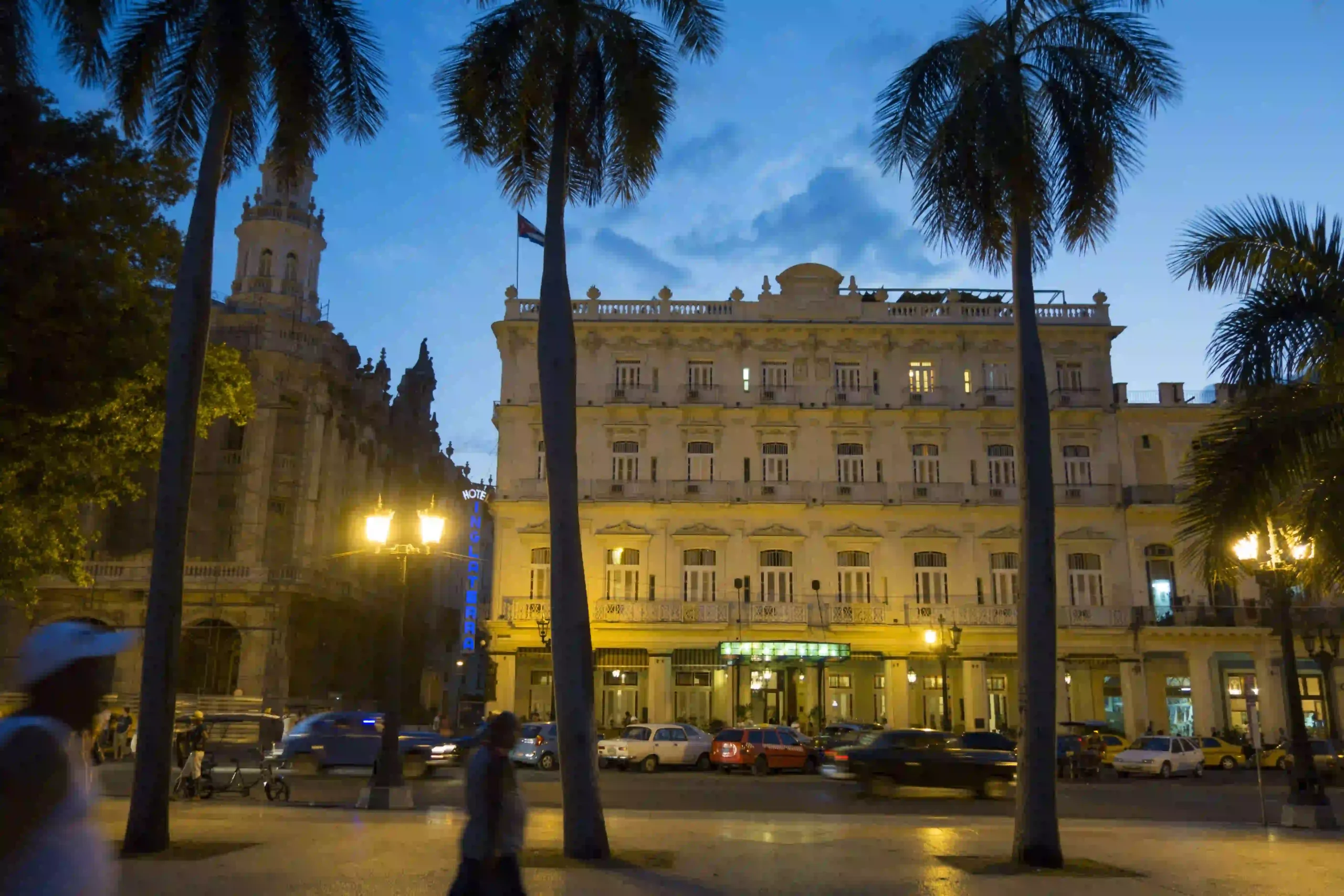
Hotel Inglaterra sits on Havana’s Parque Central, has been open since 1875, and shows up constantly in Cuba travel searches. But for U.S. travelers, the story doesn’t start with amenities. It starts with a federal restriction that rules the property out entirely for overnight stays, no matter what price you find online.
Our Rating
7.9/10
Location
9.5
Service
7.4
Cleanliness
7.6
Value for Money
6.8
Dining
8.0
In This Article
- Can Americans Legally Stay at Hotel Inglaterra?
- Hotel Inglaterra Cuba: Where It Sits in Havana
- Booking Hotel Inglaterra Havana Cuba: Pricing and Cancellation
- Payment, Cash, and Currency Reality
- Wi-Fi and Staying Connected
- Rooms, Amenities, and Comfort
- Dining, Bars, and Nearby Paladares
- Safety, Service, and Nearby Attractions
- Where This Leaves U.S. Travelers
Can Americans Legally Stay at Hotel Inglaterra?
No. If you’re a U.S. citizen, a permanent resident, or anyone else subject to U.S. jurisdiction, you cannot legally lodge at Hotel Inglaterra, pay for a room there, or book it on someone else’s behalf through a third-party site. The property sits on the U.S. Department of State’s Cuba Prohibited Accommodations List, and that listing carries actual legal force under the Cuban Assets Control Regulations, not just a warning. This isn’t an old rule that quietly faded out. The list is still active. In July 2025, the State Department added eleven more properties to it, which tells you enforcement is ongoing, not historical. In my eight years covering Cuba travel for U.S. audiences, Inglaterra is one of the properties I get asked about most. It photographs beautifully and sits right on Parque Central, so people assume it must be bookable. But wanting to stay somewhere and being legally allowed to stay somewhere are two different questions in Cuba, and this hotel is a clean example of that gap. The reasoning behind the restriction comes down to ownership. Properties controlled by the Cuban government, by GAESA, the military-run conglomerate, or by specific Cuban officials get flagged for the list. Inglaterra is state-owned through Gran Caribe, which puts it squarely in that category.“Being on the Prohibited Accommodations List isn’t a technicality you can plan around. It comes down to who owns the property, and booking through a foreign site doesn’t change that for a U.S. traveler.” Gabriel Fountain, Licensed U.S.-Cuba Travel ConsultantHere’s the part most people miss: being barred from overnight lodging doesn’t mean you can’t visit Cuba at all. You still need a qualifying purpose under one of the twelve authorized travel categories, and most independent travelers rely on “Support for the Cuban People.” That category actually points you away from a state-run hotel like Inglaterra and toward private casas particulares and paladares instead. The twelve categories, at a glance:
- Family visits
- Official government business
- Journalistic activity
- Professional research and professional meetings
- Educational activities
- Religious activities
- Public performances, clinics, workshops, and competitions
- Support for the Cuban people
- Humanitarian projects
- Activities of private foundations or research institutes
- Exportation and reexportation transactions
- Certain authorized information and telecommunications transactions
Hotel Inglaterra Cuba: Where It Sits in Havana
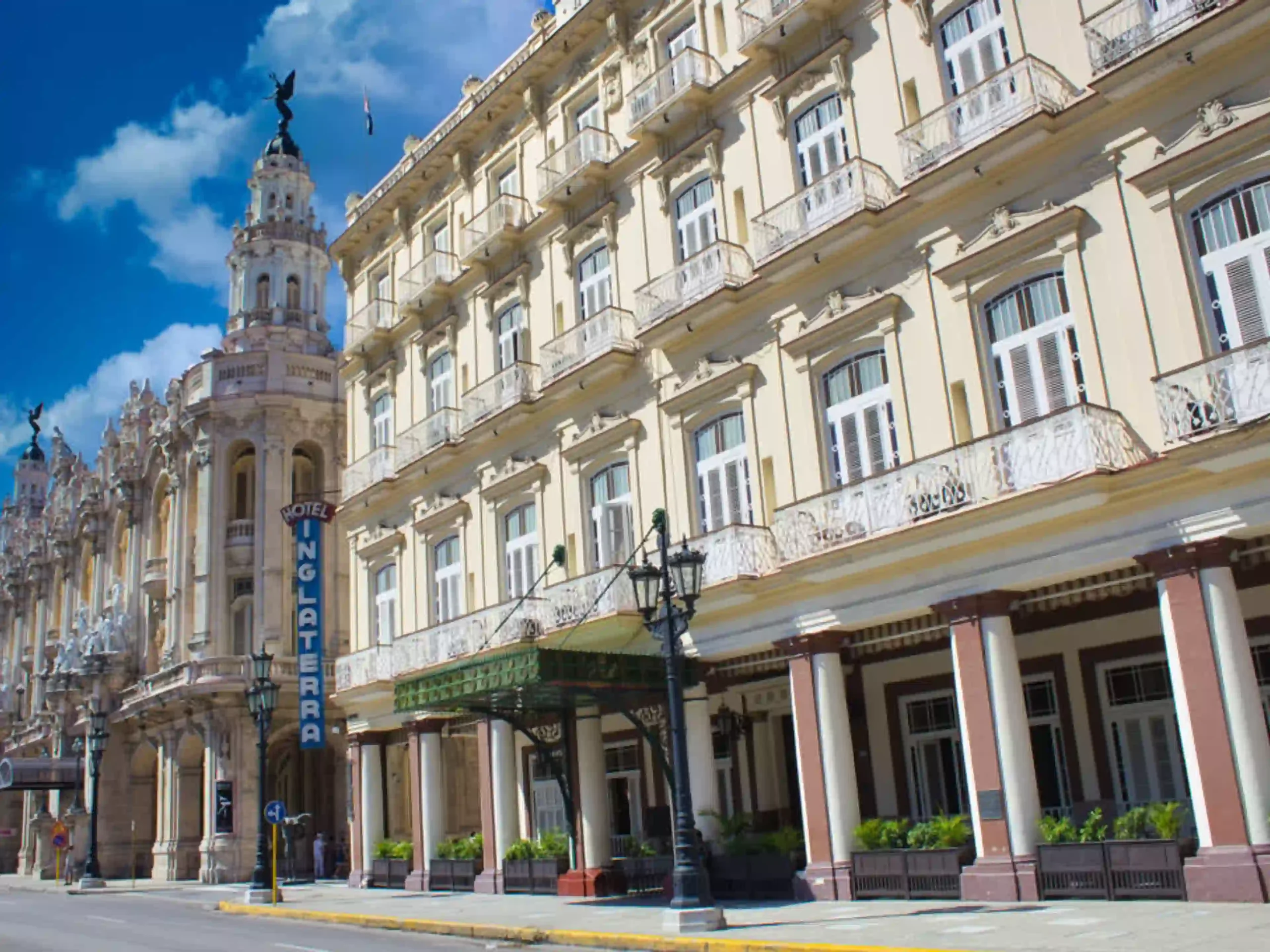
Hotel Inglaterra sits at 416 Paseo del Prado, right on the corner of San Rafael, directly across from Parque Central. It’s next door to the Gran Teatro de La Habana and a short walk from El Capitolio, which puts it about as central as Havana gets. The building has been operating since 1875, making it the oldest still-running hotel in the city. It’s a designated National Monument, and honestly, that history shows in the neoclassical detailing, the iconic glass marquee added in 1914, and the general sense that you’re inside something older than the tourism industry itself.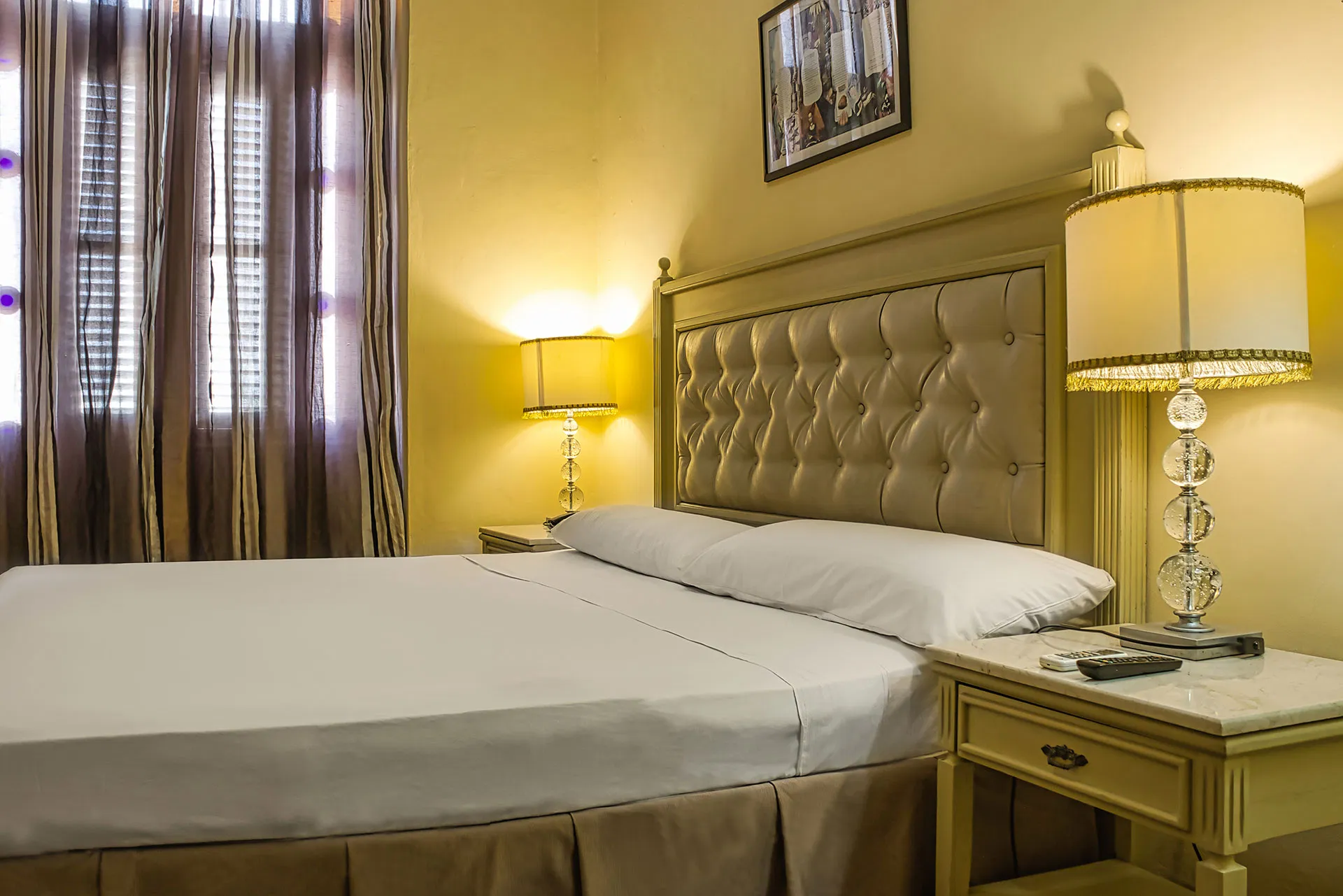
Booking Hotel Inglaterra Havana Cuba: Pricing and Cancellation
For non-U.S. travelers, nightly rates vary a lot depending on the booking channel and season, generally landing somewhere between roughly 70 and 210 dollars per night for a standard room. The spread is wide enough that it’s worth comparing a few sites before assuming any one number is accurate.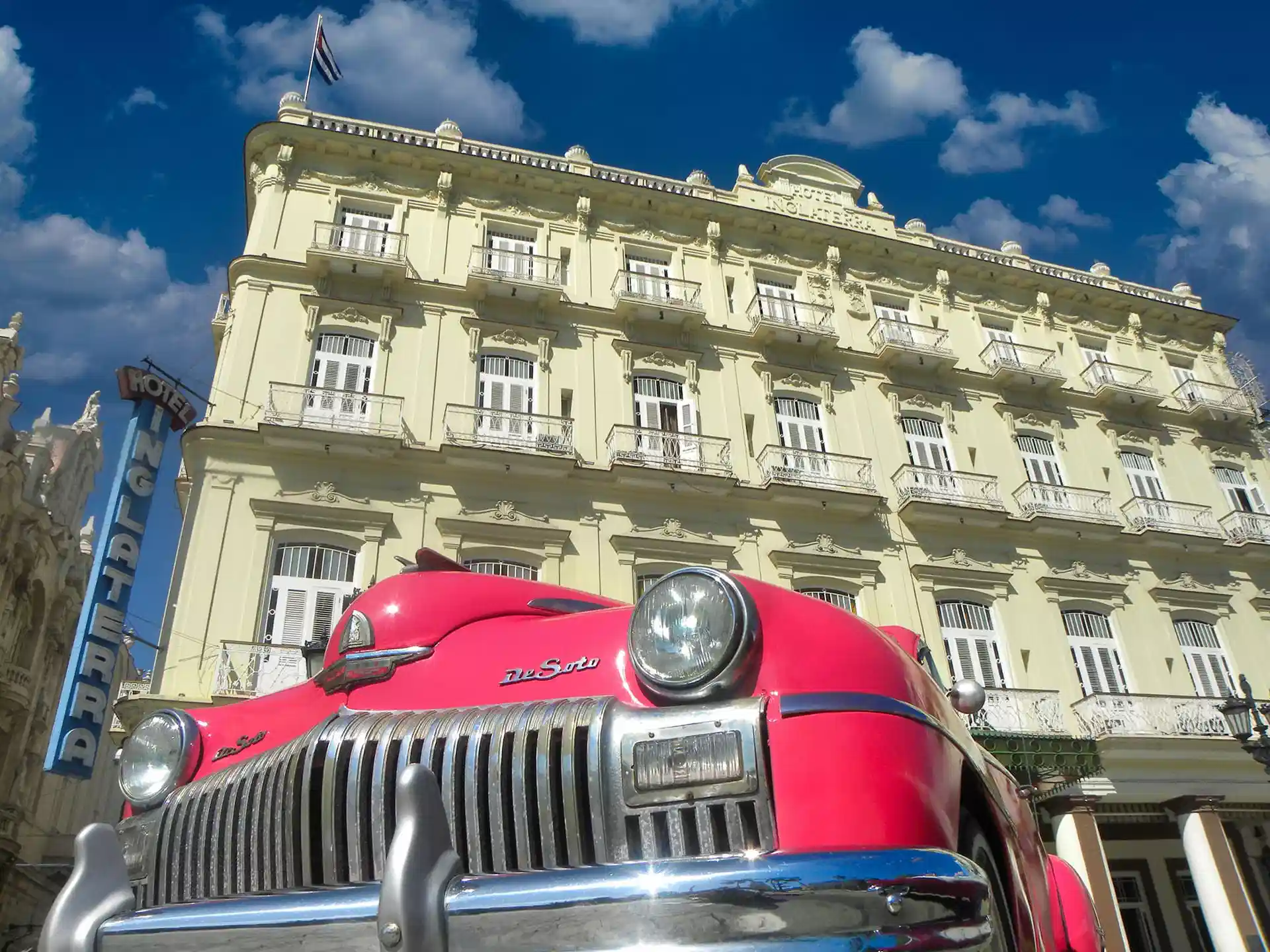
Payment, Cash, and Currency Reality
The short answer? It depends on who you are, but for U.S. travelers it’s moot anyway. Inglaterra’s official policy accepts Visa and Mastercard credit cards only, no cash, for lodging and extras. But there’s a catch that makes this a non-issue for Americans in practice. U.S.-issued Visa and Mastercard cards generally don’t function in Cuba at all, because of the broader sanctions environment. So even setting the CPAL restriction aside, payment itself would be a dead end. For non-U.S. travelers with functioning cards, there isn’t much of a workaround needed. Instead of a traditional damage deposit, the hotel just charges the full stay upfront, and incidentals get billed to the same card. If you do need to change currency while you’re in the area, Parque Central sits close to banks, CADECA exchange offices, and ATMs, all within a few minutes on foot. That’s useful context even if it’s not directly relevant to booking Inglaterra itself.Wi-Fi and Staying Connected
Expect solid Wi-Fi in public spaces like the lobby and bar, but coverage gets less certain once you’re actually in a room. Some listings advertise free Wi-Fi without qualification, while others specify it’s limited to public areas and restaurants only. One operator notes a pattern worth knowing about generally: an hour of free access on arrival, then a per-hour charge after that through the hotel’s own system. Think about it this way: this is fairly typical for state-run Cuban hotels, not unique to Inglaterra. No published speed numbers exist, but reviews describe it as fine for email and basic browsing, not fast by U.S. standards. If the hotel’s network lets you down, Parque Central itself doubles as one of Havana’s known public ETECSA Wi-Fi hotspots, so backup access is genuinely steps away. Because the hotel uses its own connectivity system, you typically don’t need a Nauta card on-site. For a broader trip, foreign visitors generally rely on ETECSA tourist SIMs or eSIMs built for Cuba, since standard U.S. roaming plans tend to be unreliable or prohibitively priced there.Rooms, Amenities, and Comfort
Room counts break down roughly into 42 doubles, 24 king-size rooms, 10 triples, 4 singles, and 3 superior rooms, based on operator listings. Some face the street with balconies over Parque Central, others face inward toward quieter patios. Standard amenities across inglaterra hotel rooms include:- Air conditioning in every room
- Private bathroom with hot and cold water and a hairdryer
- Satellite TV and a telephone
- Safe deposit box, usually with a surcharge
- Minibar, also typically charged separately
- 110V/60Hz outlets, with some rooms also carrying 220V sockets
Dining, Bars, and Nearby Paladares
El Colonial, the main restaurant, handles breakfast and other meals in a neoclassical dining room across from reception. Whether breakfast is included depends entirely on your rate. Some packages bundle it in, others sell it separately, so check the fine print before assuming. La Sevillana, a tiled bar just off the lobby, leans into Seville-style ceramics and works well for drinks or a light bite. Down at street level, Gran Café el Louvre has hosted musicians, poets, and travelers for generations, and it’s genuinely one of the better people-watching spots in the city. The rooftop bar and grill is consistently the most talked-about feature of the whole property. It has a jacuzzi, sun beds, cocktails, live music, and sweeping views, and it comes up constantly in reviews as the highlight of any inglaterra hotel havana visit, even from guests who had mixed feelings about the rooms. Within half a kilometer, a handful of well-reviewed paladares fill in the gaps: Ricardon, Sibarita Habana, Elizalde Bar-Restaurante, and El Café, all roughly a three to six minute walk. For dietary restrictions, the hotel can generally handle basic vegetarian requests, but complex medical diets are genuinely difficult to manage anywhere in Cuba, not just here.Safety, Service, and Nearby Attractions
The immediate neighborhood is about as safe as Havana gets, sitting in one of the most patrolled, tourist-heavy stretches of the city, right between Parque Central, the Gran Teatro, and El Capitolio. Standard big-city caution still applies: watch your bags, and skip the darker side streets late at night. Staff generally speak workable English given the location’s tourist volume, and reviews lean positive on friendliness, especially around the rooftop bar and Gran Café el Louvre. That said, some guests report slow service or a tired attitude at the front desk during busy stretches, so the experience isn’t uniformly polished. There’s no free hotel shuttle to the airport. You’re looking at a regular taxi, a classic car service, or a transfer prebooked through a tour operator. The hop-on hop-off tourist bus does stop across Parque Central, but that’s for city touring, not airport runs. On the attractions side, this is about as walkable as Havana gets. The Gran Teatro is next door, Parque Central is across the street, El Capitolio is roughly 400 meters away, and Old Havana’s colonial core, including Plaza Vieja, sits within a kilometer.Is inglaterra hotel cuba worth visiting even if you can’t stay overnight?
Yes, and this is genuinely the practical workaround most U.S. travelers land on. The CPAL restriction only covers lodging, so nothing stops you from stopping by the rooftop bar, grabbing a coffee at Gran Café el Louvre, or wandering through the lobby to take in the architecture. Plenty of licensed U.S. itineraries route through the area for exactly this reason, treating Inglaterra as a landmark and social stop rather than a place to sleep. Just keep any spending there separate from your actual accommodation, which should be a private casa or a hotel that isn’t on the prohibited list.How do I find hotel inglaterra la habana cuba on a map?
Look for 416 Paseo del Prado, at the corner of San Rafael and San Miguel in Centro Habana. It sits directly across from Parque Central, so if you can find that square, you can find the hotel. The Gran Teatro de La Habana is immediately next door, which makes it an easy landmark to navigate by if street signage gets confusing. Most Havana taxi drivers know the location instantly, since it’s one of the most recognized addresses in the old city.Are there other hoteles en inglaterra-style historic properties in Havana?
There are, though most of the truly historic state-run ones share Inglaterra’s CPAL problem for U.S. travelers, since a lot of Havana’s grand old hotels are government-owned. Hotel Nacional de Cuba is one of the most famous examples, and it’s also on the restricted list. If historic character matters to you as a U.S. traveler, your realistic options shift toward well-reviewed casas particulares in Habana Vieja or Vedado, several of which occupy equally old buildings without the ownership issue.What OFAC travel category should I use if I want to visit Havana but not stay at CPAL hotels?
Most independent U.S. travelers self-certify under Support for the Cuban People, which requires structuring your trip around private businesses rather than state-run ones. That means casas particulares for lodging, paladares for meals, and private taxis or guides where possible, all documented for your own records. It’s a general license, so you don’t apply to OFAC in advance, but you do need to keep a real record of your itinerary in case it’s ever requested. Given how directly it overlaps with which hotels you can and can’t use, it’s worth reading the specific requirements before you book anything.Where This Leaves U.S. Travelers
Hotel Inglaterra is a genuinely fascinating piece of Havana history, and I understand why it keeps showing up on wish lists. Winston Churchill stayed there. Antonio Maceo stayed there. The building has survived closures, renovations, and a failed decade-long attempt by Starwood and Marriott to bring it into their portfolio before U.S. regulators shut that plan down entirely in 2020. But none of that changes the practical reality for a U.S. traveler today. It’s on the Cuba Prohibited Accommodations List, the restriction is actively enforced, and U.S. payment cards wouldn’t work there regardless. The legally sound move is to treat it as a stop, not a stay, and put your actual nights toward a private casa particular that also happens to support the local economy directly, which is the whole point of traveling under Support for the Cuban People in the first place. After eight years doing this professionally, my advice doesn’t change much from hotel to hotel: check the CPAL list before you fall in love with a property, not after. Inglaterra earns its reputation. Just make sure your itinerary earns its legality too.
Gabriel Fountain Senior Travel Correspondent — Cuba & Caribbean Travel | Licensed U.S.-Cuba Travel Consultant
Gabriel has been covering Cuba travel for U.S. audiences for over 8 years, having personally visited and reviewed more than 60 hotels across Havana, Varadero, Trinidad, and Cayo Coco. He specializes in helping American travelers navigate OFAC travel regulations, licensed categories, and payment restrictions — turning a legally complex destination into an accessible one. Before focusing on Cuba, Gabriel worked as a hospitality auditor for a U.S.-based travel agency, evaluating hotel standards across Latin America. His reviews combine on-the-ground experience with practical guidance on visas, currency exchange, and booking logistics specific to U.S. citizens. He has been featured as a Cuba travel expert on regional travel podcasts and contributes to several U.S. outlets covering Caribbean tourism.
Sources
- U.S. Department of State. “Cuba Prohibited Accommodations List.” State.gov, 2025.
- U.S. Department of State. “Updating Cuba Prohibited Accommodations List.” Federal Register, 2025.
- U.S. Embassy in Cuba. “Traveling to Cuba.” US Embassy Havana, 2026.
- U.S. Department of the Treasury, OFAC. “Cuba Travel Authorizations.” Treasury.gov.
- Cuban Adventures. “How to Purchase the Cuba eVisa.” CubaGroupTour.com, 2026.
- Cubas Best. “Support for the Cuban People Guide for US Visitors.” CubasBest.com, 2026.