


The Gran Hotel Manzana Kempinski La Habana is Cuba’s first true five-star luxury hotel, set inside a restored 1917 shopping arcade steps from Parque Central. It’s also on two U.S. government lists that make lodging there illegal for Americans. This guide covers the legal reality, the price per night, and what the hotel actually offers non-U.S. travelers.
Our Rating
8.5/10
Location
9.6
Service
8.7
Cleanliness
9.0
Value for Money
7.2
Dining
8.2

In This Article
- Is It Legal for U.S. Travelers to Book the Gran Hotel Manzana Kempinski?
- What Is the Gran Hotel Manzana Kempinski La Habana, Exactly?
- How Much Does It Cost Per Night, and How Do You Actually Pay?
- Wi-Fi, Power, and Room Comfort: What to Expect
- Food and Dining: On-Site Restaurants vs. Old Havana Paladares
- Staff, Service, and Safety at the Property
- What’s Walkable From the Hotel’s Parque Central Doorstep
- Where This Leaves American Travelers
Is It Legal for U.S. Travelers to Book the Gran Hotel Manzana Kempinski?
No. The Gran Hotel Manzana Kempinski Cuba is named on both the U.S. State Department’s Cuba Prohibited Accommodations List and its separate Cuba Restricted List. That means lodging, paying for lodging, or booking a room here on someone else’s behalf is prohibited for anyone subject to U.S. jurisdiction, no matter which of the 12 OFAC travel categories applies. Here’s the part most people miss. There are actually two separate restrictions stacked on top of each other. The Cuba Restricted List blocks direct financial transactions with entities tied to the Cuban military and security services. The Cuba Prohibited Accommodations List, created under 31 CFR § 515.210, specifically targets lodging. This hotel sits on both. The hotel is operated by Kempinski but built and owned through Gaviota, a hospitality conglomerate controlled by Cuba’s Ministry of the Revolutionary Armed Forces. That ownership chain is exactly what triggers the restriction, and it’s not unique to this property. Sister property Gran Hotel Bristol, another kempinski hotel havana visitors sometimes confuse with this one, carries the same designation.“Clients ask me all the time whether the Kempinski brand somehow makes a property safe to book. It doesn’t. OFAC doesn’t care who manages the hotel, it cares who owns the building and who profits from your stay. Kempinski hotel Cuba properties tied to Gaviota are off the table regardless of the operator’s reputation.” Gabriel Fountain, Licensed U.S.-Cuba Travel ConsultantMost independent American travelers use the “Support for the Cuban People” category, which requires staying at private accommodations and eating at private restaurants, not government-run hotels. In my experience advising clients on this exact category, that requirement alone rules out this hotel before OFAC’s lodging ban even enters the conversation. One more wrinkle worth flagging: as of July 1, 2026, Cuba’s paper Tourist Card was replaced by a digital e-Visa for most travelers. That change affects entry logistics, not the OFAC restrictions on this specific property. The legal ban stands regardless of how you get your visa.
- Family visits
- Official government business
- Journalistic activity
- Professional research and meetings
- Educational activities
- Religious activities
- Public performances, clinics, workshops, and athletic competitions
- Support for the Cuban people
- Humanitarian projects
- Activities of private foundations or research institutes
- Exportation, importation, or transmission of information or informational materials
- Certain authorized export transactions
What Is the Gran Hotel Manzana Kempinski La Habana, Exactly?
The gran hotel manzana kempinski is a 246-room, five-star property carved out of the Manzana de Gómez, a city block built between 1894 and 1917 as Cuba’s first European-style shopping arcade. It opened as a hotel in May 2017 and is widely marketed as Cuba’s first genuine luxury hotel. This isn’t a purpose-built resort. It’s a converted commercial arcade with two interior passageways that once formed an X-shaped shopping corridor, the kind of layout that inspired comparisons to the old covered passages of Paris. That history shows up in the finished hotel manzana cuba: soaring ceilings, marble stairs, and carved stone facades on all four sides of the block.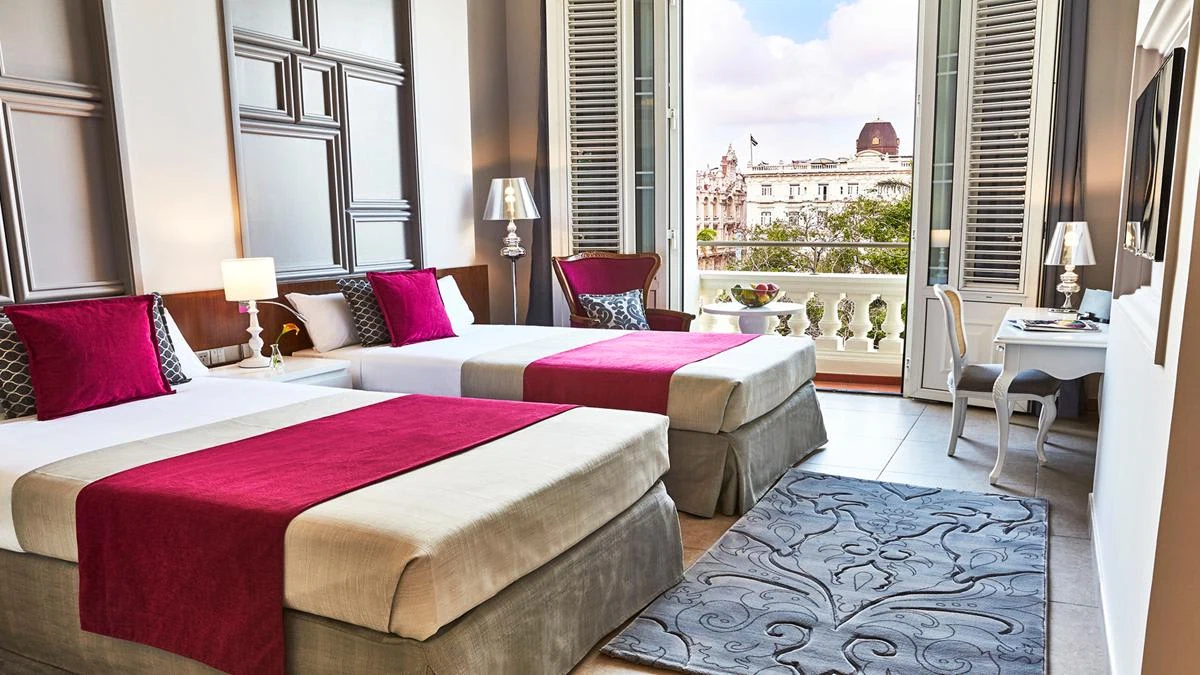
How Much Does It Cost Per Night, and How Do You Actually Pay?
For eligible non-U.S. travelers, the gran hotel manzana kempinski la habana price per night runs from roughly €150 per person for a Patio Room without breakfast, based on current European tour-operator listings, up to several thousand dollars for the presidential suite. Rates vary heavily by season, booking channel, and whether breakfast is bundled in.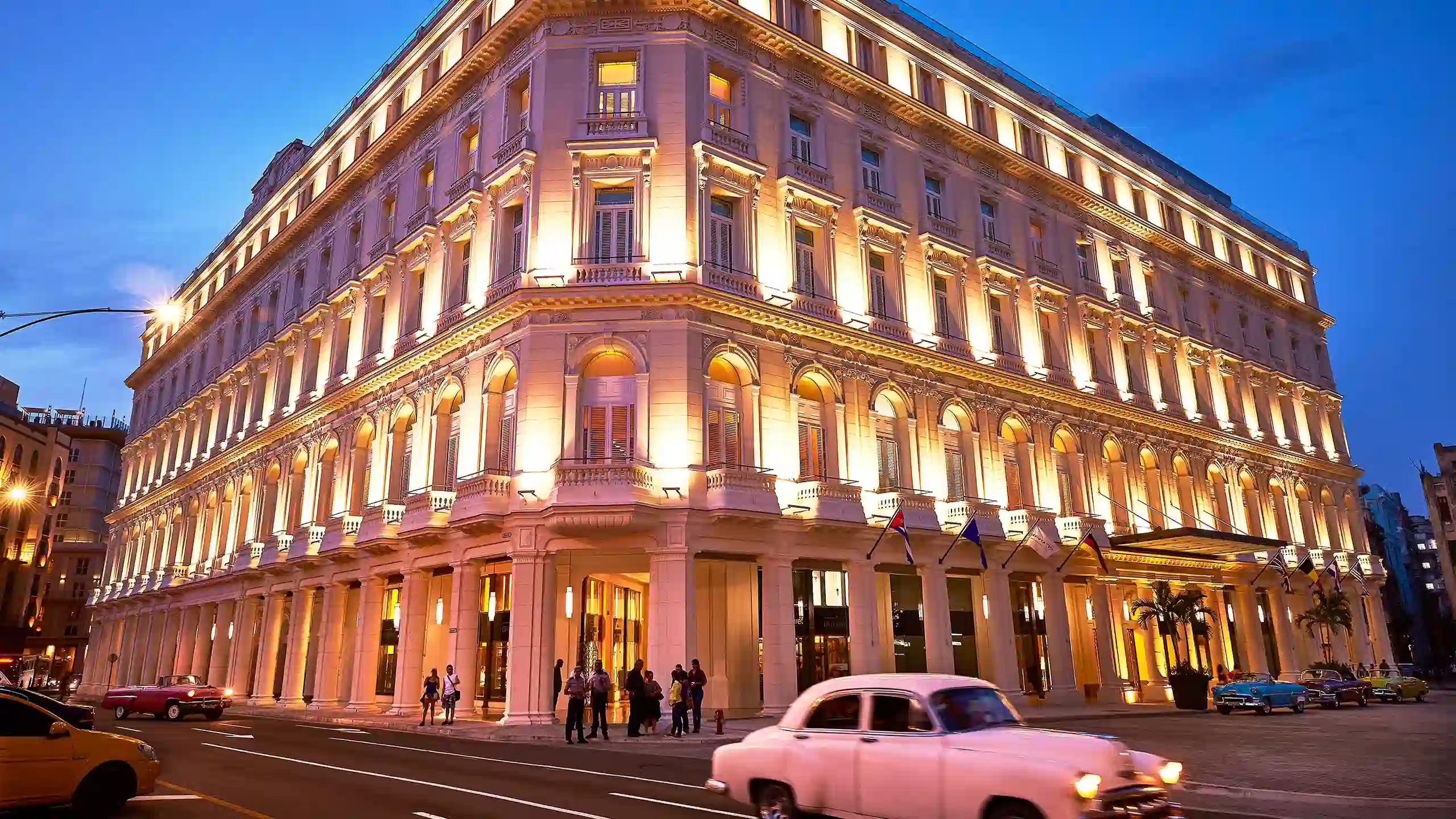
Wi-Fi, Power, and Room Comfort: What to Expect
Wi-Fi is free throughout the property, not limited to the lobby, which already sets it apart from most kempinski hotel cuba competitors and from casas particulares across the island. Guests receive individual login codes that work anywhere on-site. Speed gets described as solid by Cuban standards in guest reviews, though you’ll need to re-enter your login details each time your device reconnects. That’s a minor annoyance rather than a dealbreaker, and it beats relying on a public ETECSA hotspot in a nearby park. Power is a bigger variable. Cuba’s grid has faced well-documented reliability issues, and recent guest reviews mention occasional electricity interruptions during stays. As a flagship five-star property, the hotel is better insulated against blackouts than smaller hotels or casas, but it isn’t fully immune to island-wide constraints. Rooms are fully air-conditioned and reviewers consistently describe them as well soundproofed, a real plus given the hotel fronts a busy central plaza with classic-car traffic. Hot water is generally available, though at least one review flagged inconsistent water pressure relative to the size of the rainfall shower heads installed.Food and Dining: On-Site Restaurants vs. Old Havana Paladares
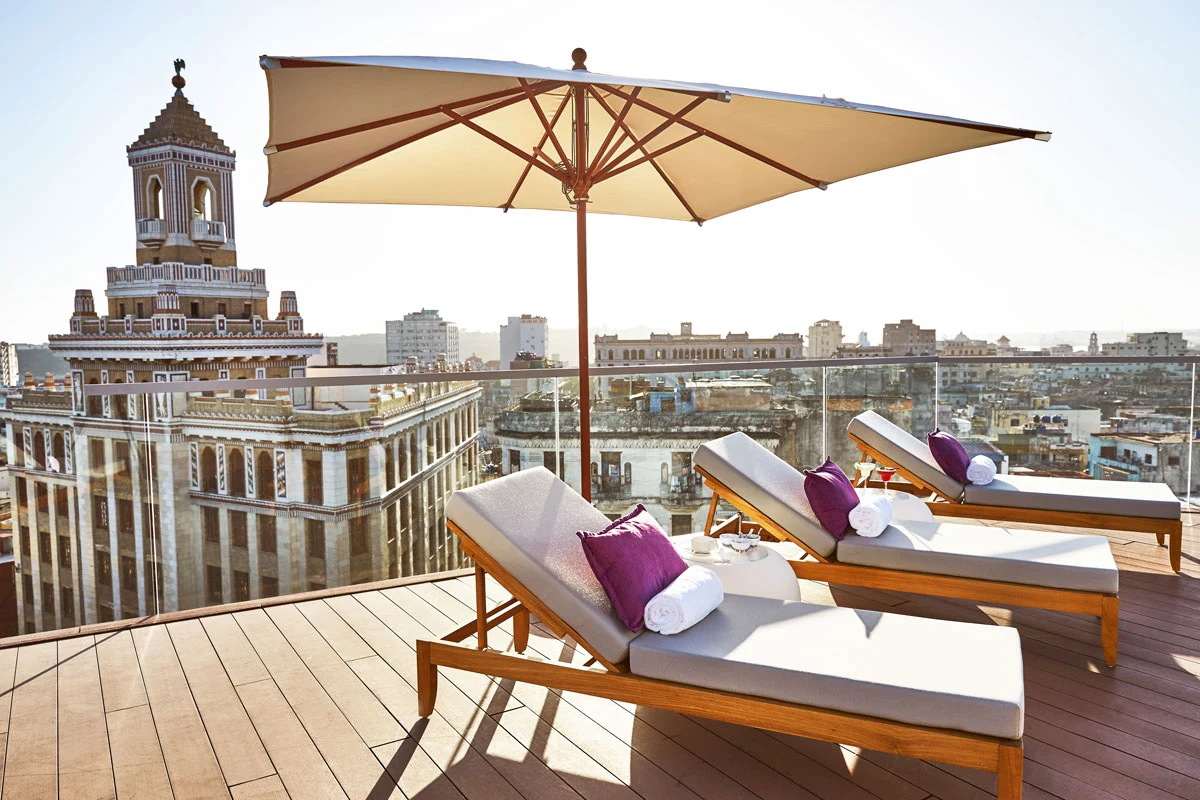
The hotel kempinski cuba runs at least two restaurants and three bars. Confluencias handles breakfast and general dining, while San Cristóbal is the rooftop option with panoramic views over Old Havana and a bar built around the infinity pool. Breakfast quality gets consistent praise, but pricing runs premium even by Western standards. One review cited roughly $33 per person for breakfast when purchased à la carte rather than bundled into the room rate, so it’s worth checking exactly what your booking includes before you commit.
Staff, Service, and Safety at the Property
Front-desk and concierge service at the manzana kempinski earns consistently strong marks in guest reviews, with plenty of “five-star from check-in to check-out” type comments. Multilingual staff routinely handle English-speaking guests without issue. But there’s a catch. Food and beverage service is more of a mixed bag. Some reviewers describe slow seating and order mix-ups at the rooftop restaurant, and one detailed independent review noted an airport VIP pickup that arrived roughly 30 minutes late. The pattern that emerges is strong reception and concierge work paired with more variable service in restaurants and spa. Safety-wise, the hotel sits in a heavily visited, UNESCO-protected stretch of Old Havana near major government buildings and theaters. Violent crime is low, though the usual big-city petty theft risks apply, so standard precautions like securing valuables and avoiding flashy cash displays still make sense. On property, expect 24-hour staffed reception, room safes, elevators, and controlled access to guest floors. Cleanliness ratings run high across recent reviews, with public spaces frequently described as immaculate and rooms rated around 4.5 out of 5 for tidiness.What’s Walkable From the Hotel’s Parque Central Doorstep
The location is arguably the single biggest selling point of kempinski havana as a property, restrictions aside. It sits roughly 50 meters from Parque Central, in the dead center of Old Havana’s UNESCO World Heritage core.- Gran Teatro de La Habana: about 260 meters away
- El Capitolio: about 650 meters away
- Museo de la Revolución: about 650 meters away
- Plaza de la Catedral: roughly 1.5 kilometers away
- Plaza de Armas: roughly 1.6 kilometers away
- The Malecón seafront: about 1 kilometer, a 10 to 15 minute walk
Can Americans legally stay at the Gran Hotel Manzana Kempinski La Habana?
No. The property appears on both the U.S. State Department’s Cuba Restricted List and its Cuba Prohibited Accommodations List, and OFAC’s own guidance prohibits U.S. persons from lodging, paying for lodging, or booking a room here on someone else’s behalf. This applies regardless of which OFAC travel category you’re using, including Support for the Cuban People. There’s no workaround through third-party booking sites or foreign tour operators either, since the prohibition follows the property, not the booking channel. If you’re a U.S. citizen or green card holder planning Cuba travel, this hotel needs to come off your shortlist entirely.What’s the difference between the Cuba Restricted List and the Cuba Prohibited Accommodations List?
The Cuba Restricted List is the broader of the two, covering entities and subentities tied to the Cuban military, intelligence, or security services, and it bars direct financial transactions with anything on it. The Cuba Prohibited Accommodations List is narrower and specific to lodging, created under 31 CFR § 515.210 to block reservations at properties owned or controlled by the Cuban government or certain officials. The Gran Hotel Manzana Kempinski happens to be named on both, which is somewhat unusual since not every restricted-list property also appears on the accommodations list. Practically speaking, for a traveler deciding where to book, being on either list is disqualifying.Where can I see photos of the Gran Hotel Manzana Kempinski La Habana?
The hotel’s official Kempinski website carries professional photography of the rooms, rooftop pool, spa, and public spaces, and it’s the most reliable source since the images are current and property-approved. Travel review platforms and recent guest posts also offer a useful reality check against the marketing shots, since guest photos tend to show rooms as they actually look after regular use. Wikipedia’s entry includes a gallery with older archival images of the building from its arcade era, useful if you’re more interested in the architecture than the hotel itself. If you’re a U.S. traveler, treat these as historical or architectural interest rather than trip planning material, since booking here isn’t an option under current law.What should non-U.S. travelers budget per night, all-in?
Room rates alone range from roughly €150 per person for a basic Patio Room up to several thousand dollars for a presidential suite, so the honest answer depends heavily on room category and season. Add breakfast if it isn’t bundled in, since à la carte breakfast has been reported around $33 per person, and factor in premium pricing at the rooftop restaurant and spa as well. Spa treatments run high too, with one detailed review citing roughly $140 for a 90-minute hot-stone massage plus a 10 percent service charge. Budget generously, bring backup cash beyond your card limit, and confirm exactly what your specific rate includes before arrival.Where This Leaves American Travelers
The short answer? It depends. For most of the world, the gran hotel manzana kempinski la habana photos you see online are an accurate preview of a genuinely impressive property: a restored century-old arcade, a rooftop pool with sweeping views, and a location you can’t beat anywhere else in Havana. For U.S. citizens and green card holders, none of that matters until the legal question gets resolved, and it doesn’t resolve in the hotel’s favor. The Cuba Restricted List and Prohibited Accommodations List designations aren’t ambiguous, and OFAC’s guidance leaves no travel category that gets you around them. After eight years of walking American clients through exactly this kind of decision, my advice is always the same: check the lists before you fall in love with the photos, not after. If Old Havana’s Parque Central location is what’s pulling you in, that same address puts you within walking distance of dozens of licensed casas particulares and private paladares that satisfy Support for the Cuban People requirements outright. You get the same neighborhood, the same landmarks out your window, and a trip that’s actually legal to book.
Gabriel Fountain Senior Travel Correspondent — Cuba & Caribbean Travel | Licensed U.S.-Cuba Travel Consultant
Gabriel has been covering Cuba travel for U.S. audiences for over 8 years, having personally visited and reviewed more than 60 hotels across Havana, Varadero, Trinidad, and Cayo Coco. He specializes in helping American travelers navigate OFAC travel regulations, licensed categories, and payment restrictions — turning a legally complex destination into an accessible one. Before focusing on Cuba, Gabriel worked as a hospitality auditor for a U.S.-based travel agency, evaluating hotel standards across Latin America. His reviews combine on-the-ground experience with practical guidance on visas, currency exchange, and booking logistics specific to U.S. citizens. He has been featured as a Cuba travel expert on regional travel podcasts and contributes to several U.S. outlets covering Caribbean tourism.
Sources
- U.S. Department of State. “Cuba Prohibited Accommodations List.” State.gov, 2025.
- U.S. Department of the Treasury, Office of Foreign Assets Control. “Cuba Sanctions FAQs.” OFAC, 2020.
- U.S. Department of the Treasury, Office of Foreign Assets Control. “FAQ 734: Cuba Restricted List.” OFAC, 2019.
- Cigar Aficionado. “Cuba’s Forbidden Properties.” Cigar Aficionado, 2025.
- Kharon. “U.S. Adds 5 Hotels to Cuba Restricted List.” Kharon, 2024.
- CubaGetaway. “Cuba Visa Guide: Tourist Card, OFAC License & Entry Requirements.” CubaGetaway, 2026.