


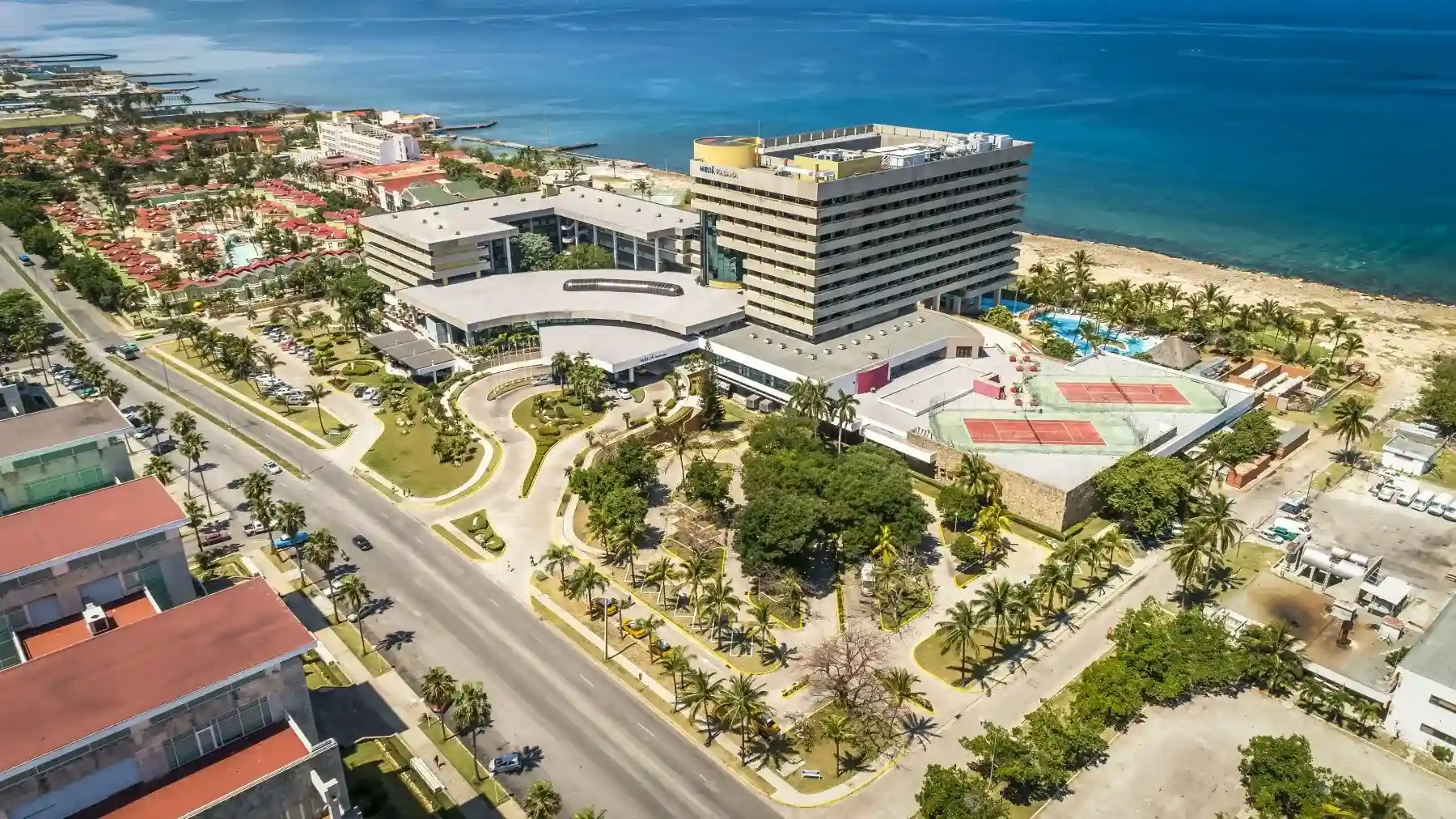
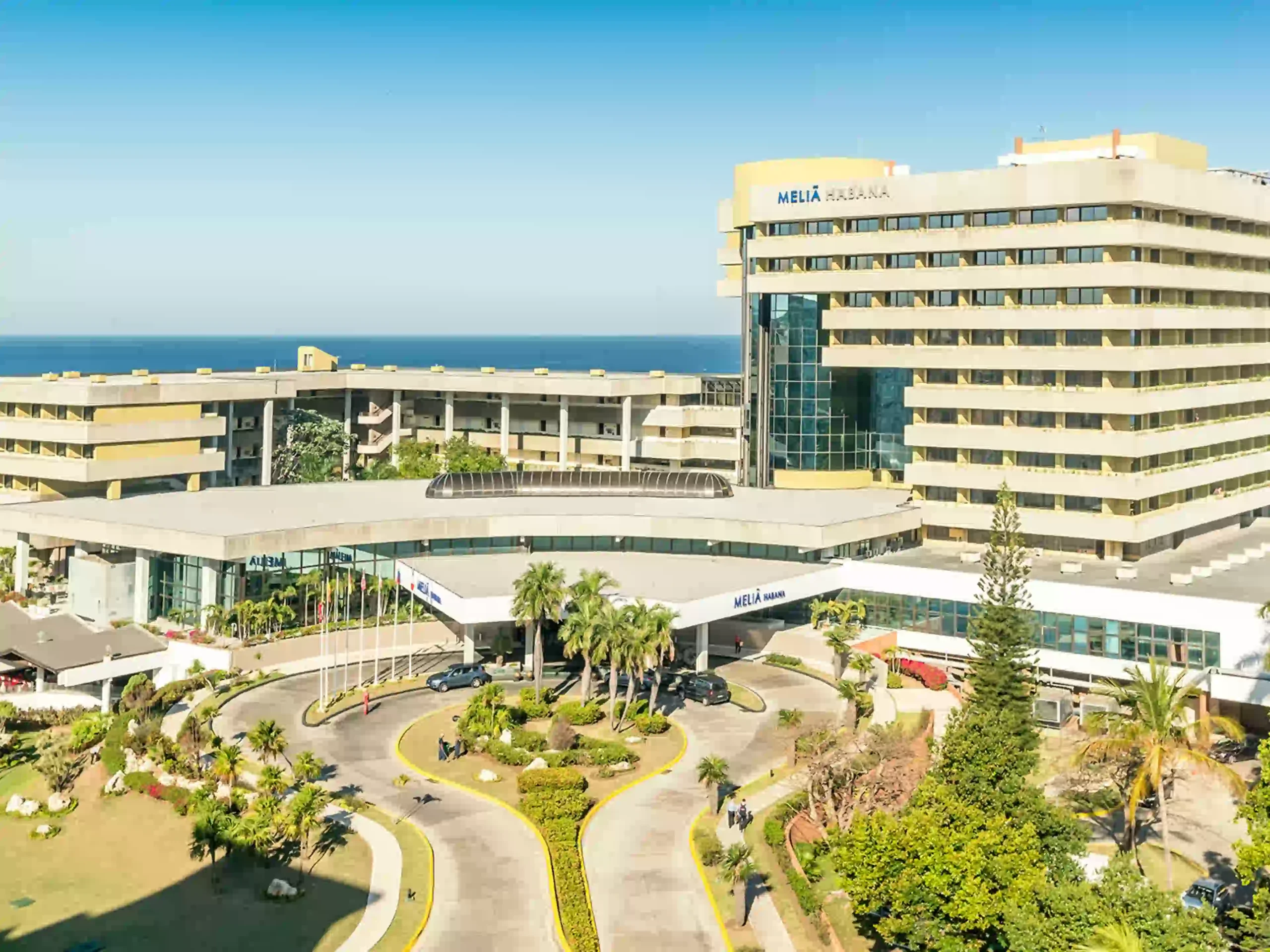
Meliá Habana is a 5-star property in Havana’s Miramar district, praised for its pools, dining, and business-friendly location. But meliá habana carries a legal complication most travel sites skip: it’s on the U.S. State Department’s list of hotels Americans can’t book. This guide covers what the hotel offers, why US travelers can’t stay there, and where to go instead.
Our Rating 8.4/10
Location 8.9
Service 8.7
Cleanliness 9.1
Value for Money 6.9
Dining 8.4
In This Article
- Can US Citizens Actually Book Meliá Habana?
- Where Is Meliá Habana, and Why Miramar Matters
- What Do the Rooms and Rates Look Like?
- What’s the Food, Drink, and Amenity Scene Onsite?
- How Reliable Are Wi-Fi, Power, and Water?
- What Do Verified Guest Reviews Actually Say?
- Where Should US Travelers Stay Instead?
- Money, SIM Cards, and Other Cuba Logistics Worth Knowing
Can US Citizens Actually Book Meliá Habana?
No. Meliá Habana appears by name on the U.S. State Department’s Cuba Prohibited Accommodations List, which means US travelers can’t lodge there, pay for a room there, or even book on someone else’s behalf. This isn’t about picking the wrong OFAC travel category. It’s a straight prohibition tied to the property itself. The listing traces back to ownership. The property is owned by Cubanacan, a state tourism corporation, and only managed under contract by the Spanish chain Meliá Hotels International. That joint-venture structure is exactly what the restriction targets. Whether you search hotel melia habana cuba or melia habana cuba on any booking engine, the listings will show rates in US dollars. But American travelers legally can’t act on them. The Federal Register confirmed the hotel’s status again in a July 2025 update, so this isn’t outdated guidance from a few years back. It’s current. Here’s the part most people miss. In my eight years covering Cuba travel for US audiences, I’ve seen this exact hotel recommended in dozens of “best of Havana” roundups aimed at Americans. Almost none of them mention the restriction. What the prohibition actually covers:- Booking a room directly through Meliá’s site or a third-party OTA
- Paying for a stay there through any intermediary, including a travel agent
- Reserving a room on behalf of a friend or family member
- Staying there even if the reservation was made before the property was listed
Where Is Meliá Habana, and Why Miramar Matters
Meliá Habana sits on Quinta Avenida in Miramar, Havana’s modern business district. It’s not the colonial Havana most tourists picture. Think wide avenues, embassies, and corporate offices instead of cobblestones. That’s part of why melia habana havana search results skew corporate. The hotel sits about 15 meters from the Miramar Trade Center and roughly five minutes from the Palacio de Convenciones. If you search hotel melia habana havana cuba expecting Old Havana charm, you’ll find something different instead.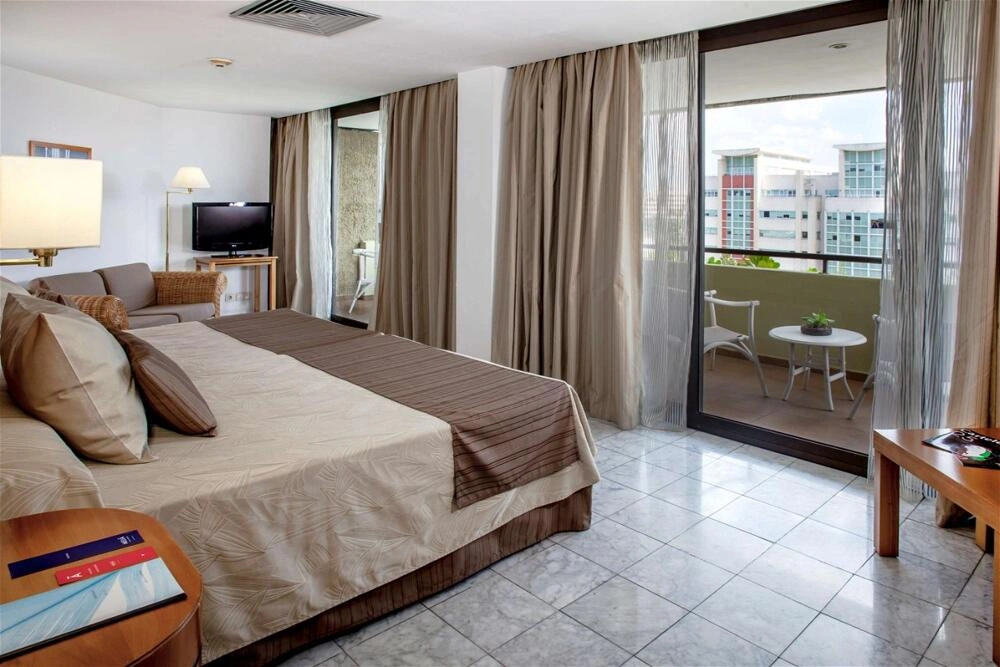
What Do the Rooms and Rates Look Like?
Standard rooms run $157 to $356 a night. Suites run $626 to $840, depending on season and availability. The property has somewhere between 395 and 409 rooms total, and sources don’t fully agree on the exact count. Anyone comparing hotel meliá habana listings against other Miramar properties will notice the price spread is wide. That’s because melia habana hotel rates shift heavily between Classic rooms and The Level suites, and it gets more complicated once you factor in seasonal pricing on top of room tier.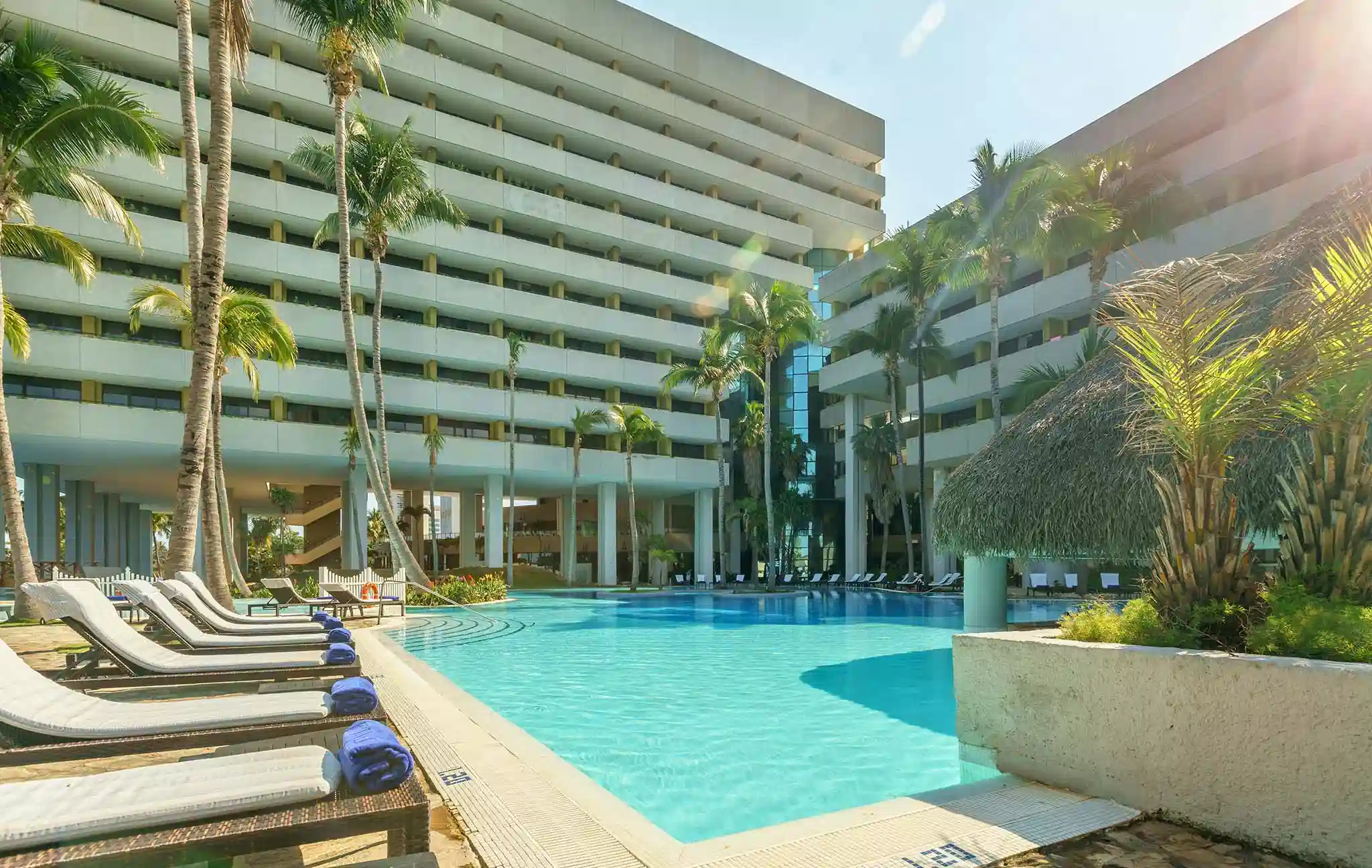
What’s the Food, Drink, and Amenity Scene Onsite?
The hotel runs 12 separate food and beverage outlets, which is a lot for one property. That range spans a Japanese-Peruvian fusion restaurant to a dedicated cigar lounge. A melia hotel havana review wouldn’t be complete without mentioning La Bella Cubana, the Nikkei-fusion restaurant run by chef Roberto Yagui. Guests researching melia la habana dining options online consistently flag it as a highlight. Beyond dining, the amenity list is long for an urban hotel:- Three outdoor pools, including one of the largest hotel pools in Havana
- Two tennis courts and a squash court
- A spa with sauna, massage, and beauty services
- A kids club with its own dedicated pool section
How Reliable Are Wi-Fi, Power, and Water?
Not especially, and that’s true across most of Cuba, not just this hotel. Guest reviews mention slow, inconsistent Wi-Fi and occasional plumbing issues in standard rooms. Reviewers browsing melia havana forums online report similar complaints at comparable hoteles melia cuba properties elsewhere on the island. So why does this matter if you can’t book the hotel anyway? Because the same infrastructure limits apply wherever you actually stay in Havana. Free Wi-Fi has been available hotel-wide since 2017, but bandwidth is limited by Cuba’s broader telecom infrastructure, not by the hotel’s own choices. Power outages happen occasionally, though nothing described as chronic. Supply chain delays make replacement parts hard to source, so a broken fixture might sit unfixed longer than you’d expect at a comparable US hotel. That’s a Cuba-wide pattern, not something specific to this one property.What Do Verified Guest Reviews Actually Say?
Reviewers rate it well. KAYAK shows 8.1 out of 10 across 71 verified reviews, and Reserving.com puts it at 8.4 out of 10. Here’s what the data actually shows underneath those headline numbers. Cleanliness scores especially high, at 9.1 out of 10, and location comes in at 8.9. If you’re scanning hotel melia habana feedback or melia habana hotel cuba threads, cleanliness and staff hospitality come up again and again as the top-rated categories.“A high guest rating says nothing about whether US law allows a traveler to book the property in the first place.” Independent Cuba travel guide, “Is Cuba Open to Tourists in 2026?”, 2026Worth pausing on that for a second. A hotel can earn genuinely strong reviews from European, Canadian, and Latin American guests while still being completely off the table for Americans. Those two facts aren’t in conflict, they’re just answering different questions.
Where Should US Travelers Stay Instead?
Look at privately owned casas particulares and independently run guesthouses instead. These fall outside the Cuba Restricted List because they’re not state-owned, and they satisfy the documentation most OFAC categories require. It’s tempting to keep scrolling melia cuba listings or comparing melia hotels cuba options hoping to find a workaround. Think about it this way: there isn’t a workaround for this chain’s state-linked properties, no matter how the search results are worded. Under the Support for the Cuban People category specifically, the US Embassy in Havana lists 12 total authorized travel categories, and staying with a private host actually strengthens your paper trail rather than complicating it. After reviewing more than 60 properties across Havana, Varadero, Trinidad, and Cayo Coco, I’ve found the casas particulares route isn’t a compromise. It’s often the better trip. Guides written specifically for this OFAC category now name Meliá directly as a brand to skip. What to look for instead:- Casas particulares with verified independent ownership, not government-linked management
- Guesthouses in Vedado or Habana Vieja recommended by past US travelers
- Hosts who can provide receipts for your five-year OFAC recordkeeping requirement
Money, SIM Cards, and Other Cuba Logistics Worth Knowing
Bring cash, expect a floating exchange rate, and don’t count on US cards working anywhere. Cuba runs almost entirely on cash for foreign visitors. None of this changes whether you search melia en cuba or hotels melia cuba out of curiosity. The logistics below apply to Miramar generally, wherever you actually end up staying. CADECA exchange offices were running a floating rate around 409 to 417 CUP per dollar as of late 2025 into 2026, a sharp jump from the fixed 120 CUP rate used for years before. CADECA also caps how much you can exchange, generally around $100 per person per visit. Bring more cash than you think you’ll need, because getting more once you’re there takes planning. For connectivity, you’ll need an ETECSA SIM or Nauta card, since US phone plans don’t work in Cuba without one. Public Wi-Fi parks are a reliable backup when hotel or casa internet lags.Is meliacuba the official Meliá booking site?
Yes, meliacuba.com is Meliá’s regional booking portal for its Cuban properties, and it will happily show you rates for Meliá Habana. That doesn’t change anything for US travelers, since the restriction applies to the property, not to which website you use to search for it. Booking through meliacuba, a global OTA, or a travel agent all run into the same problem. The safest move is to treat any Meliá-branded Cuban hotel as off-limits until you’ve confirmed its current status on the State Department’s list.Where can I find melia habana photos or hotel meliá habana fotos before deciding where to stay?
Meliá’s own site and major OTAs both host extensive photo galleries, and searching melia habana photos or hotel meliá habana fotos will turn up plenty of images of the pool, lobby, and suites. Browsing them is completely fine and doesn’t violate anything. It’s the booking and payment steps that carry the legal restriction, not looking at pictures. Many travelers use those photos simply to get a sense of Miramar’s hotel style before choosing a compliant casa particular instead.Is melia.com cuba the same as booking directly with the hotel?
Melia.com routes Cuban properties through the same regional booking system as meliacuba, so functionally, yes, they lead to the same reservation process. Neither path gets a US traveler around the lodging restriction. The Cuban Assets Control Regulations apply regardless of which Meliá-affiliated domain processes the transaction. If you’re comparing melia.com cuba against other booking channels hoping one is exempt, none of them are.Does hotel melia cuba pricing show up in USD?
Most listings for hotel melia cuba properties display rates in US dollars, since that’s the currency most international booking platforms default to for Cuban hotels. Seeing a USD price doesn’t mean the transaction is legal for an American cardholder, though. The pricing display and the booking eligibility are handled by completely separate systems. Always check a property’s current status on the official restricted list before assuming a USD rate means you’re clear to book.Why is Meliá Habana restricted if it’s managed by a Spanish company?
Because management and ownership are two different things under Cuban law. Meliá Hotels International runs the day-to-day operations, but Cubanacan, a Cuban state tourism corporation, actually owns the property. US sanctions target that ownership structure, not the operating brand, which is why several Meliá-branded hotels across Cuba show up on the restricted list even though the visible signage and service are entirely Spanish-run.Where This Leaves You
Meliá Habana isn’t a bad hotel. It’s a genuinely well-run property with strong reviews, solid amenities, and a location that works well for business travel. None of that changes the legal answer for Americans. The way I look at it, this is one of the clearest cases in Cuba travel where property quality and booking eligibility are two completely separate questions. Don’t let good reviews talk you into ignoring the restriction. If you’re still comparing melia hoteles cuba options generally, save yourself the research time. Several of Meliá’s Cuban properties share the same restricted status chain-wide, so check the current list before assuming any specific location is fair game. Book with a private host instead, keep your receipts, and you’ll have a trip that’s both enjoyable and actually compliant.
Gabriel Fountain Senior Travel Correspondent — Cuba & Caribbean Travel | Licensed U.S.-Cuba Travel Consultant
Gabriel has been covering Cuba travel for U.S. audiences for over 8 years, having personally visited and reviewed more than 60 hotels across Havana, Varadero, Trinidad, and Cayo Coco. He specializes in helping American travelers navigate OFAC travel regulations, licensed categories, and payment restrictions — turning a legally complex destination into an accessible one. Before focusing on Cuba, Gabriel worked as a hospitality auditor for a U.S.-based travel agency, evaluating hotel standards across Latin America. His reviews combine on-the-ground experience with practical guidance on visas, currency exchange, and booking logistics specific to U.S. citizens. He has been featured as a Cuba travel expert on regional travel podcasts and contributes to several U.S. outlets covering Caribbean tourism.
Sources
- U.S. Department of State. “Cuba Prohibited Accommodations List.” State.gov, 2025.
- U.S. Department of State. “Updating Cuba Prohibited Accommodations List.” Federal Register, 2025.
- U.S. Embassy in Cuba. “Traveling to Cuba.” Usembassy.gov, 2026.
- Independent Cuba Travel Guide. “Is Cuba Open to Tourists in 2026? The Current Situation, Explained Honestly.” 2026.
- CiberCuba. “How Currency Exchange Will Work at CADECAs in 2026.” 2025.
- CADECA. “Welcome to Cadeca.” Cadeca.cu, 2026.