


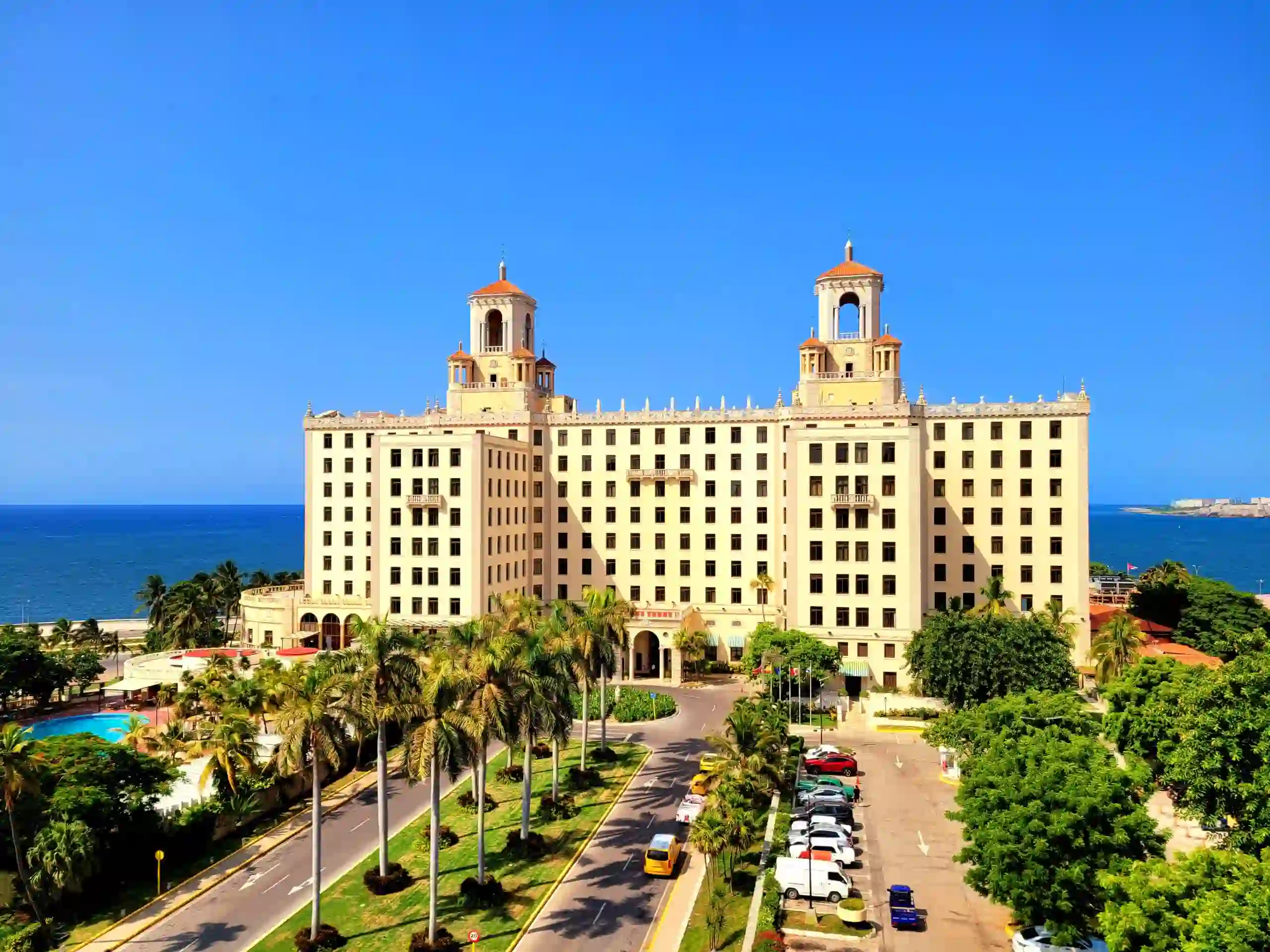
Hotel Nacional de Cuba is one of Havana’s most photographed buildings, and it’s also on the U.S. State Department’s prohibited accommodations list. This guide breaks down what that actually means for American travelers, the hotel’s mob-era casino history, and how you can legally experience the property without booking a room.
Our Rating
8.6/10
Location
9.5
Service
8.8
Cleanliness
8.6
Value for Money
7.8
Dining
8.5
In This Article
- Is Hotel Nacional de Cuba on the U.S. Prohibited List?
- What Makes Hotel Nacional Havana One of Cuba’s Most Iconic Hotels?
- Are There Casinos in Cuba? The Wild History Behind Hotel Nacional’s Casino
- How Do You Actually Visit Hotel Nacional Legally?
- What’s It Really Like Inside One of Cuba’s State-Run Hotels?
- Connectivity, Power, and Payment: The Practical Side of Cuba Hotels Havana
- Safety, Service, and What to Expect On-Site
- Frequently Asked Questions
- Where This Leaves an American Traveler
Is Hotel Nacional de Cuba on the U.S. Prohibited List?
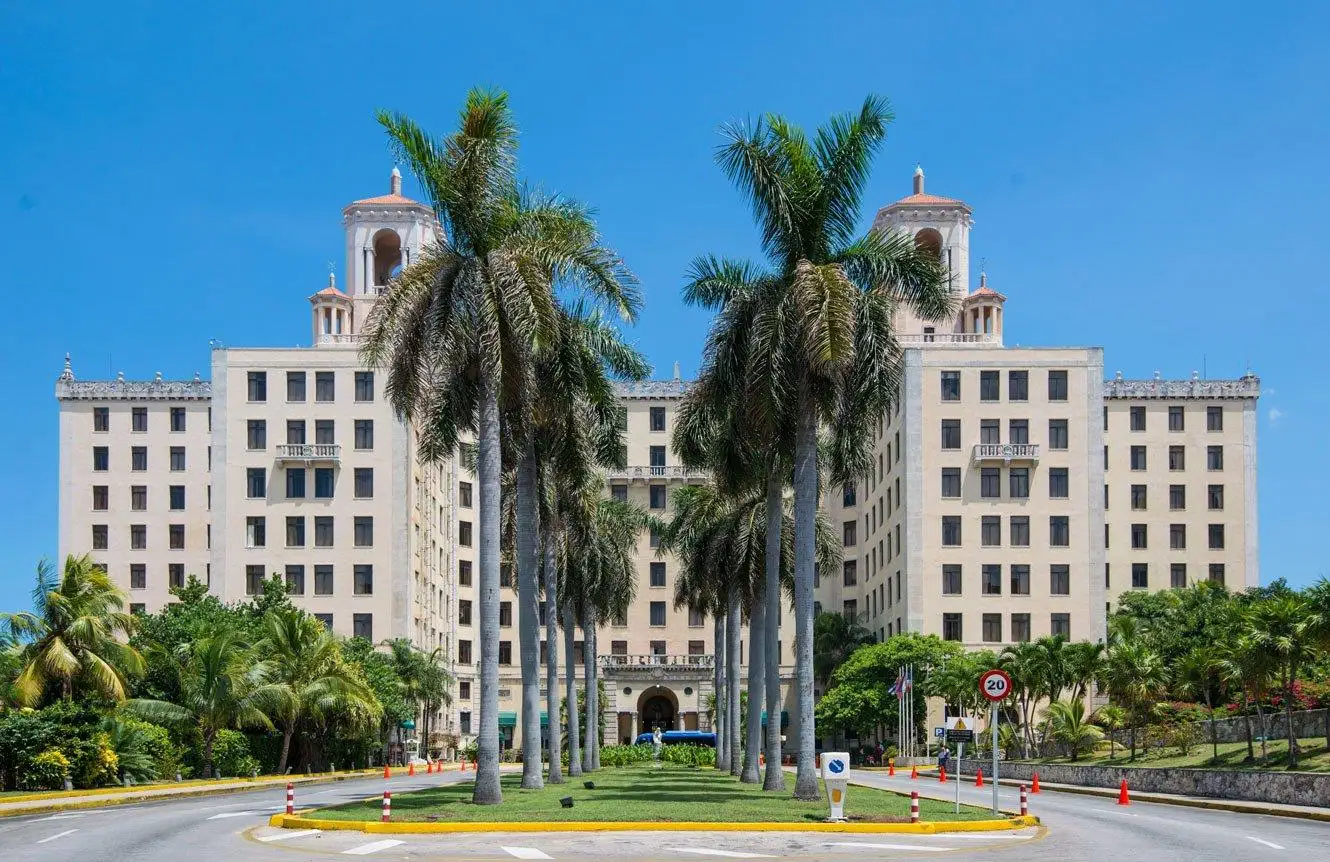
Yes. Hotel Nacional de Cuba has been on the State Department’s Cuba Prohibited Accommodations List since the list’s original 2020 publication, and it’s still there as of the most recent update. If you’re a U.S. person, meaning a citizen, permanent resident, or anyone subject to U.S. jurisdiction, you cannot legally lodge there, pay for lodging there, or book a room there on someone else’s behalf. That rule applies no matter which site you use to book. The prohibition comes from Section 515.210 of the Cuban Assets Control Regulations. It’s not a travel advisory or a soft recommendation. It’s a Treasury rule, and it exists because the hotel is owned and controlled by the Cuban government, and the list itself gets updated periodically with new properties added. But here’s the thing. The rule follows the property, not your booking channel. Whether you reserve through a big U.S. site, a European OTA, or a friend who books it on your behalf, the transaction itself is what’s prohibited, not the method you use to make it.“As a licensed Cuba travel consultant, I tell clients the same thing every time: if a hotel shows up on that prohibited list, there’s no workaround. I’ve seen people assume a foreign booking site solves the problem. It doesn’t. The list follows the property, not the platform.” Gabriel Fountain, Senior Travel Correspondent, Cuba & Caribbean TravelSo what does that actually mean for you? It means Hotel Nacional stays on your must-see list, just not your must-stay list, and the next few sections walk through exactly how to make that work.
What Makes Hotel Nacional Havana One of Cuba’s Most Iconic Hotels?
Hotel Nacional Havana opened its doors on December 30, 1930, designed by the New York firm McKim, Mead and White, the same architects behind Manhattan’s Pennsylvania Station. It sits on Taganana Hill in the Vedado district, and its mix of Spanish, Moorish, and Art Deco styles has made it a National Monument in Cuba ever since.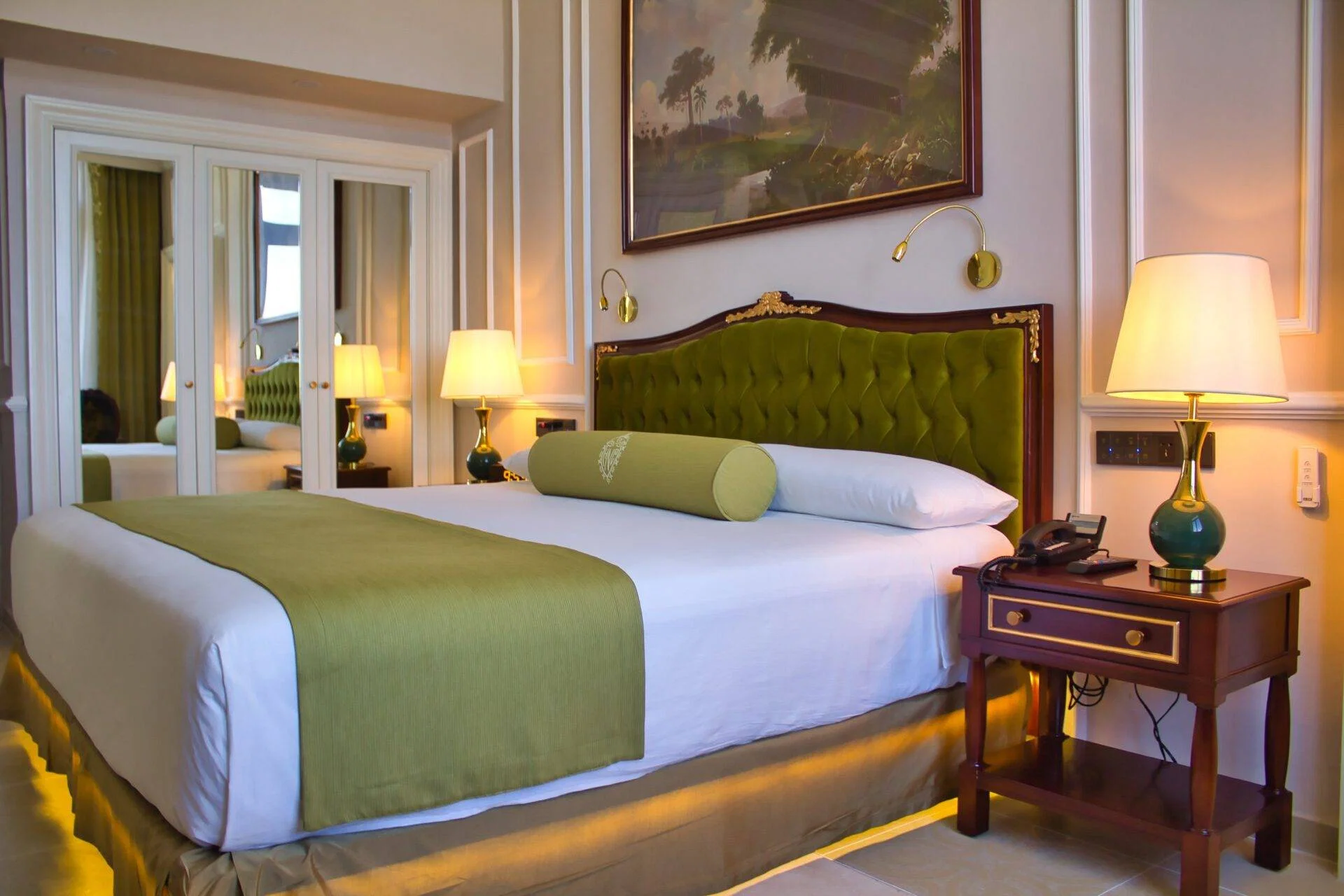
Are There Casinos in Cuba? The Wild History Behind Hotel Nacional’s Casino
No, not legally, not anymore. Cuba banned casino gambling after the 1959 revolution, and that ban has held for over six decades. But Hotel Nacional used to run one of the most notorious casinos in the hemisphere, and that history is a big part of why people still run cuba casino searches today. In 1946, the hotel hosted the Havana Conference, a mob summit organized by Lucky Luciano and Meyer Lansky. Bosses from New York, Chicago, and New Orleans flew in to divide up territory, and the meeting later showed up, dramatized, in The Godfather Part II. A decade later, Lansky opened Wilbur Clark’s Casino Internacional inside the hotel, and by 1957 it was pulling in cash on par with the biggest rooms in Las Vegas. Here’s where it gets interesting. Fidel Castro shut the casino down for good in October 1960, and casinos in Cuba have been illegal ever since. So if you’re picturing blackjack tables at Hotel Nacional today, that image belongs to 1957, not now. What you’ll find instead is a bar, a cigar lounge, and framed photos from an era that no longer exists.How Do You Actually Visit Hotel Nacional Legally?
You visit for the day, not the night. U.S. travelers can walk the grounds, sit at the terrace bar, take the historical tour, or catch the Cabaret Parisien show, as long as the trip falls under one of the 12 categories the Treasury Department authorizes for Cuba travel. Most independent American travelers use Support for the Cuban People, which requires a full-time schedule of activities that engage with Cuban civil society and private businesses rather than government-run ones. A guided history tour, paid to an independent Cuban guide, can fit that category. An overnight stay in a government-owned room does not, and staying there anyway breaks the rule regardless of intent. There’s no application to file for any of this. Travel under the 12 categories is self-certified, which the U.S. Embassy in Havana confirms directly. You declare your category and keep records for five years. Here’s the part most people miss: self-certified doesn’t mean unchecked. This is separate from the Cuban tourist card every visitor needs regardless of OFAC category, which typically runs 25 to 100 dollars depending on where you buy it.What’s It Really Like Inside One of Cuba’s State-Run Hotels?
Big, honestly. The hotel’s official site lists 426 standard rooms plus a mix of junior, senior, and specialty suites, for roughly 472 rooms and suites total. Older references, including Wikipedia, cite 457 rooms and 16 suites, reflecting the property before recent renovations. Among cuba hotels in Havana, this one still sets the benchmark for old-world scale.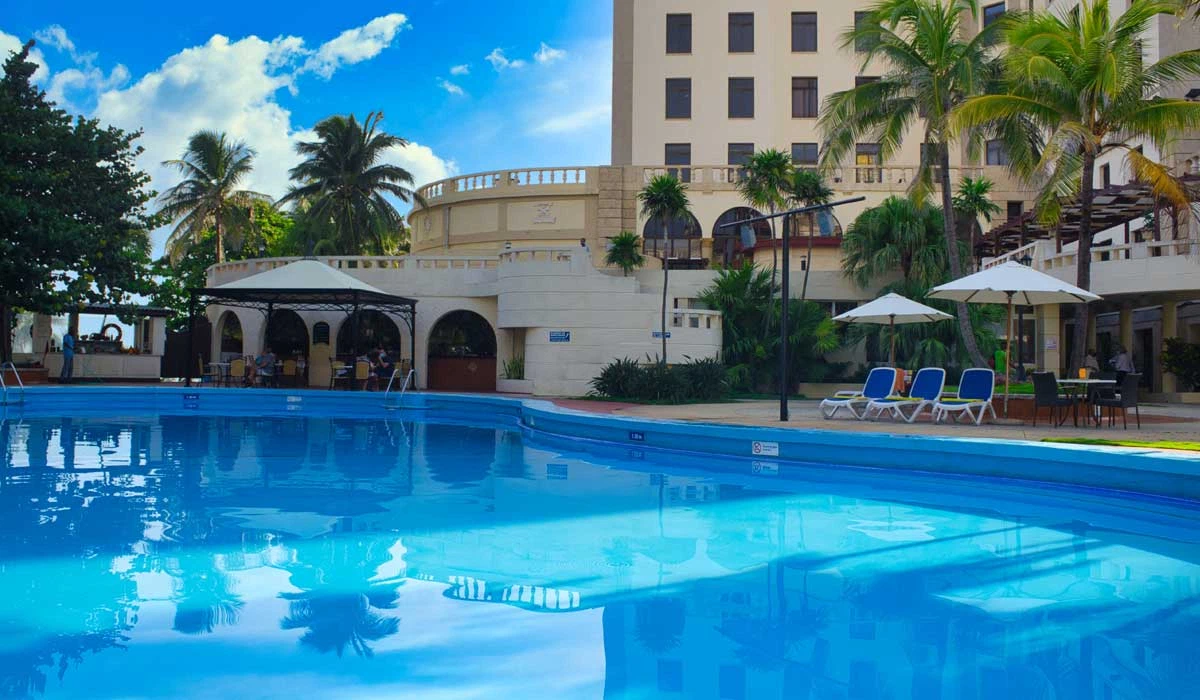
- Three restaurants, four bars, and a cafeteria spread across the grounds
- Two swimming pools and a tennis court
- A free guided historical tour most mornings, covering the missile crisis tunnels and the Hall of Fame
- A gift shop, art gallery, and currency exchange on site
Connectivity, Power, and Payment: The Practical Side of Cuba Hotels Havana
Wi-Fi is complimentary throughout the property now, not just in the lobby, which is a real shift from the old Nauta-card model most cuba hotels havana still rely on. The hotel’s own FAQ lists speeds up to 10 Mbps, which won’t feel fast by U.S. standards but is solid for Cuba. Power reliability might be the bigger deal. Havana has dealt with serious grid problems and scheduled blackouts through 2026, and Hotel Nacional runs its own backup generation for elevators, rooms, and common areas. Recent guest reviews describe ten-day stays without a single outage, even while the surrounding city went dark. Payment here has real friction points for anyone used to swiping a U.S. card:- Cash accepted in USD, EUR, and CAD, no Cuban pesos
- Credit cards accepted only if not issued by a U.S. bank or subsidiary
- Online payments processed in euros even though prices are quoted in dollars
- Prepaid Cuban USD cards available at CADECA exchanges nearby
Safety, Service, and What to Expect On-Site
Vedado is a central, well-patrolled neighborhood, and the hotel itself runs 24-hour staffed security with controlled access, meaning outside visitors can’t just wander up to guest floors. Reviewers consistently describe feeling safe on the grounds, day or night.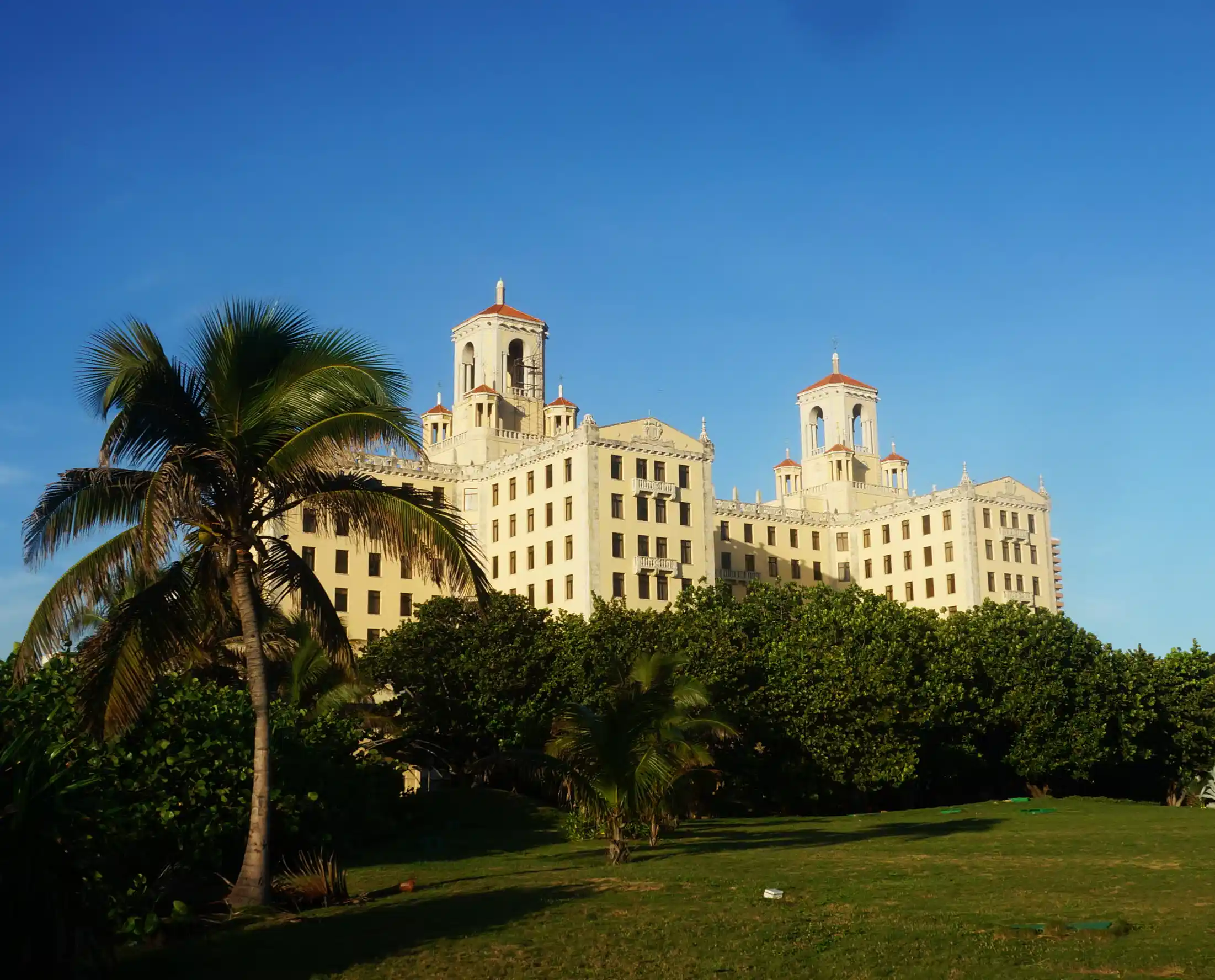
Frequently Asked Questions
Are there casinos in Cuba today?
No. Cuba banned all casino gambling after the 1959 revolution, and that ban is still in effect across the entire island. Hotel Nacional ran one of the most famous casinos in the Caribbean during the 1950s, operated by Meyer Lansky, but Fidel Castro shut it down for good in October 1960. What remains today are bars, lounges, and historical exhibits referencing that era, not functioning gaming floors. If you’re planning a Cuba trip around casino gambling, you’ll need to look elsewhere in the region.Can Americans book a room through Expedia or Airbnb?
No, and this trips people up constantly. The prohibition on lodging at Hotel Nacional follows the property, not the booking platform, so it doesn’t matter whether you reserve through a U.S. site, a European OTA, or directly with the hotel. If the property is on the State Department’s list, paying for a room there violates U.S. sanctions regardless of how the transaction is routed. The safest approach is to check any Cuban hotel against the current list before you book anything.What’s the difference between the CPAL and the OFAC 12 travel categories?
They’re two separate rules that both apply to Cuba travel. The Cuba Prohibited Accommodations List, or CPAL, names specific properties U.S. persons can’t lodge at, and Hotel Nacional is on it. The 12 OFAC travel categories are a different rule entirely; they govern why you’re allowed to travel to Cuba at all, covering things like Support for the Cuban People or Educational Activities. You need to satisfy both: travel under an authorized category, and avoid staying at any CPAL-listed property while you’re there.Do U.S. cards work at Hotel Nacional de Cuba?
Generally, no. The hotel accepts major credit cards, but only if they weren’t issued by a U.S. bank or one of its subsidiaries, which rules out most American-issued Visa and Mastercard products. Cash in USD, EUR, or CAD works, and Cuban prepaid USD cards purchased locally are another option. Plan to carry more cash than you think you’ll need, since ATMs around Havana generally won’t accept U.S.-issued debit cards either.Where This Leaves an American Traveler
The short answer? It depends on what kind of trip you’re planning. If you want to sleep inside Hotel Nacional de Cuba, that’s off the table for anyone under U.S. jurisdiction, and no booking trick changes that. Worth pausing on that for a second: none of this rules out actually experiencing the place. A day visit under Support for the Cuban People, paired with an independent Cuban guide for the historical tour, gets you the gardens, the Hall of Fame, the terrace view of the Malecon, and the mob-era stories, all without crossing the sanctions line. In my eight years covering Cuba for U.S. travelers, this is the pattern I see most: people assume an iconic hotel means you book a room there, and that assumption is exactly what gets travelers into trouble. Treat Hotel Nacional as a landmark you tour, not a hotel you book, and you’ll leave with the photos and the story intact, sanctions compliance included.
Gabriel Fountain Senior Travel Correspondent — Cuba & Caribbean Travel | Licensed U.S.-Cuba Travel Consultant
Gabriel has been covering Cuba travel for U.S. audiences for over 8 years, having personally visited and reviewed more than 60 hotels across Havana, Varadero, Trinidad, and Cayo Coco. He specializes in helping American travelers navigate OFAC travel regulations, licensed categories, and payment restrictions — turning a legally complex destination into an accessible one. Before focusing on Cuba, Gabriel worked as a hospitality auditor for a U.S.-based travel agency, evaluating hotel standards across Latin America. His reviews combine on-the-ground experience with practical guidance on visas, currency exchange, and booking logistics specific to U.S. citizens. He has been featured as a Cuba travel expert on regional travel podcasts and contributes to several U.S. outlets covering Caribbean tourism.
Sources
- U.S. Department of State. “Cuba Prohibited Accommodations List.” State.gov, 2026.
- U.S. Department of State. “Updating Cuba Prohibited Accommodations List.” Federal Register, 2025.
- U.S. Department of the Treasury, OFAC. “Cuba Sanctions FAQs.” Treasury.gov, 2026.
- U.S. Embassy in Cuba. “Traveling to Cuba.” Usembassy.gov, 2026.
- CubaGetaway. “Cuba Visa: Tourist Card, Requirements & How to Apply.” Cubagetaway.com, 2026.